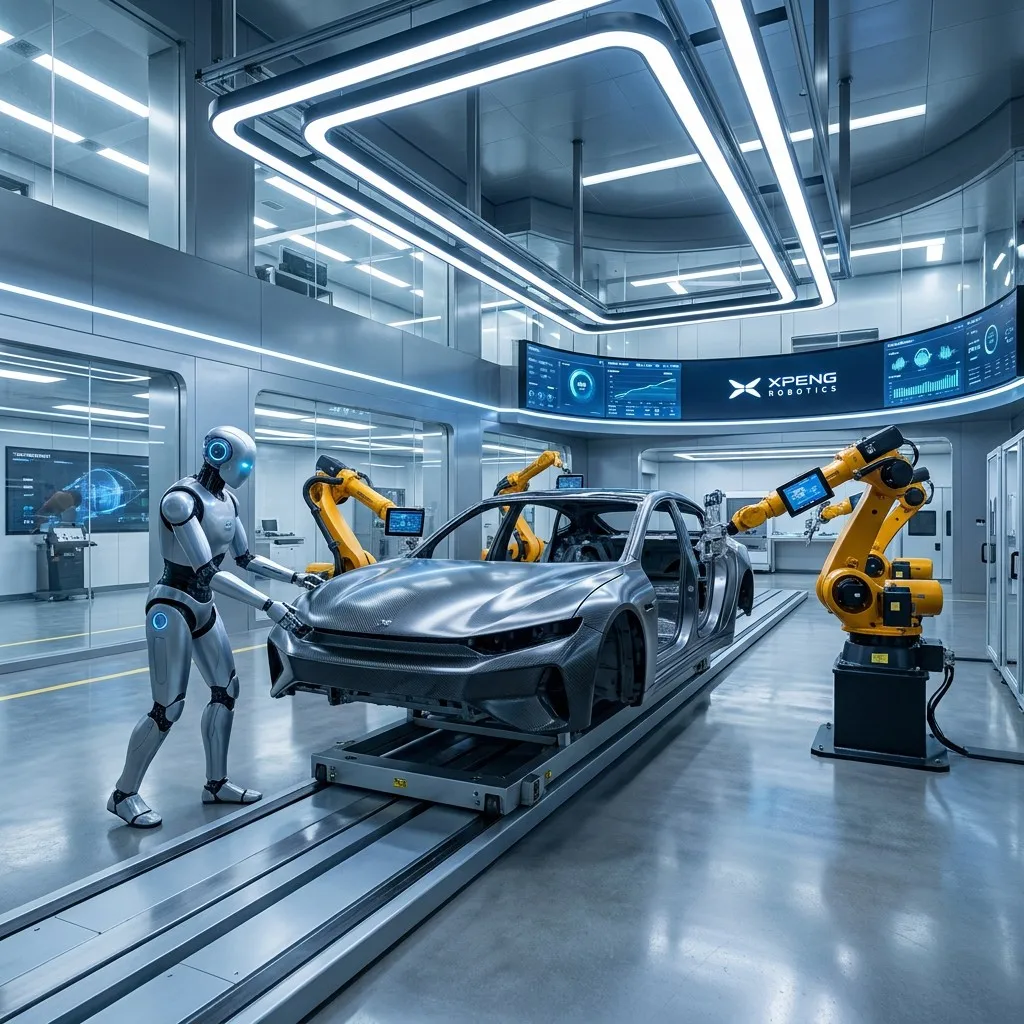
In a major announcement that blurs the lines between automotive manufacturing and advanced robotics, XPENG President Brian Gu revealed that the company expects to start large-scale production of its humanoid robots in the fourth quarter of 2026.
This move highlights a growing trend among top Chinese EV makers who are reinventing themselves as 'AI Mobility' companies. By integrating automotive-grade sensor technology and sophisticated AI algorithms into bipedal robots, XPENG aims to revolutionize industrial automation and even household assistance.
In addition to robotics, XPENG is pushing ahead with its 'flying car' projects, targeting large-scale production next year. This multi-modal approach demonstrates the sheer innovation potential emerging from China's smart mobility sector.
For the global automotive industry, the lesson is clear: the future belongs to those who can master the fusion of software, AI, and hardware across different form factors. China is currently the laboratory where this future is being built.