The global automotive trade is entering a historic new chapter. In 2026, the era of simply loading vehicles onto Roll-on/Roll-off shipping carriers and sending them abroad is evolving into a more profound, integrated phase. Leading Chinese EV manufacturers and battery giants are rapidly deploying complete, localized smart manufacturing industrial chains across Europe, South America, and Southeast Asia. This represents a paradigm shift from 'Made in China' to 'Made Locally, Managed by Chinese Technology'.
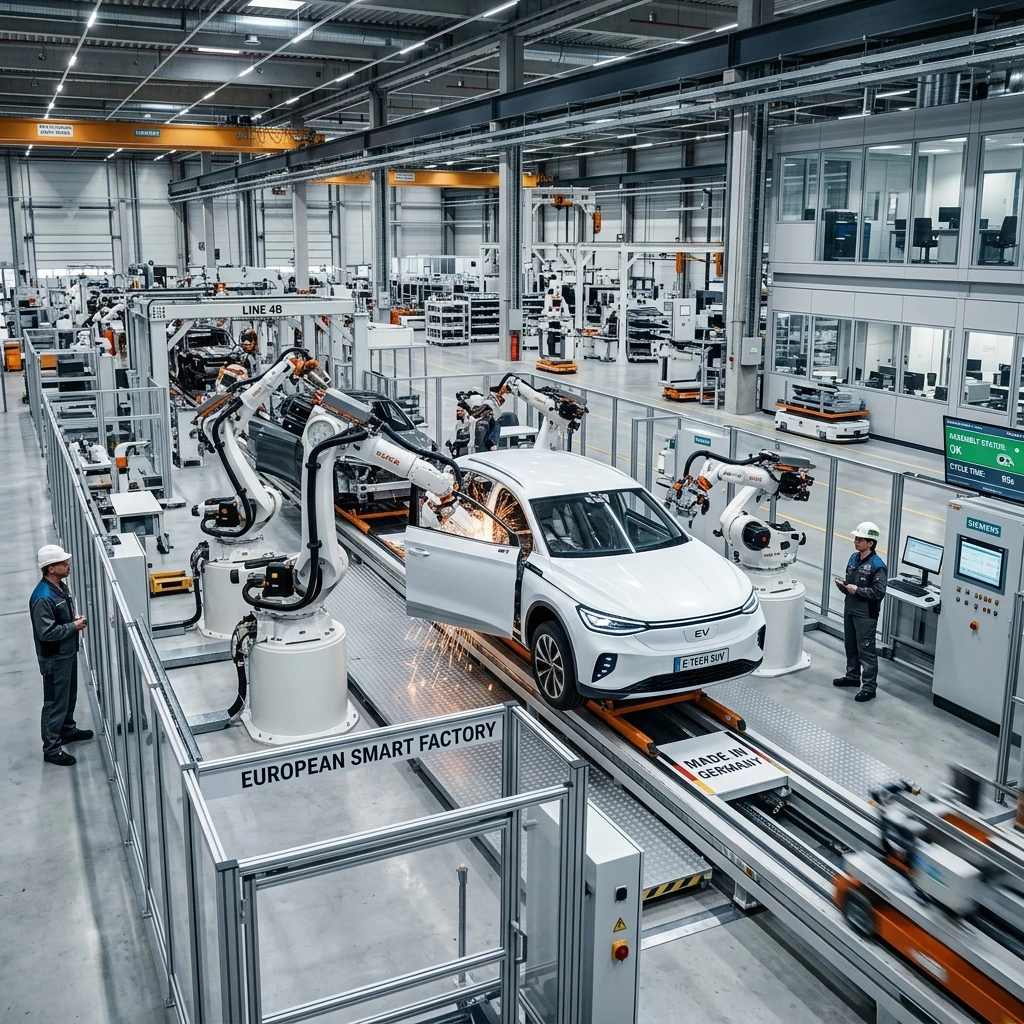
At the forefront of this industrial transition is the establishment of ultra-modern, localized assembly gigafactories. Key projects in Hungary, Spain, Brazil, and Thailand are now going online. These gigafactories are not mere assembly lines; they are fully integrated industrial hubs featuring advanced robotics, carbon-neutral stamping workshops, and highly efficient domestic supply networks. By manufacturing directly in their target markets, Chinese carmakers are avoiding shipping bottlenecks and complex tariff barriers while actively creating thousands of high-tech jobs for local communities.
Furthermore, this movement is characterized by 'Technology and Standard Output'. Rather than just exporting vehicles, Chinese engineers are exporting their state-of-the-art battery assembly standards, L2+ intelligent driving system frameworks, and carbon-neutral green factory compliance models. Global partners and joint-venture boards are increasingly adopting Chinese technical criteria as the benchmark for their local electric vehicle programs, establishing Chinese software and hardware as the new global standard.
This shift is also transforming the global automotive dealer ecosystem. Professional car distributors, corporate fleet managers, and government buyers worldwide are no longer just sourcing from a distant port. They are partnering with localized, highly resilient automotive brands that have local parts warehouses, domestic testing fields, and dedicated software maintenance support. This local integration provides importers with unprecedented supply security and long-term capital efficiency.
As localized manufacturing gains massive momentum through the rest of 2026, the competitive landscape of the global auto market is being redrawn. Carmakers that successfully blend Chinese intelligent technology with local industrial compliance are perfectly positioned to capture dominant market shares and lead the green transportation transition across Europe, Latin America, and beyond.