The Gulf Shift: Chinese Automakers Reshape the UAE and GCC Auto Market
For decades, the Gulf Cooperation Council (GCC) auto market was dominated by Japanese, Korean and American brands. Today that picture is changing fast. Chinese automakers - led by EVs and value-packed SUVs - are gaining real market share from Dubai showrooms to Riyadh dealerships, and the region is becoming one of the most important growth markets for Chinese vehicle exports.
The UAE: The Region's EV Gateway
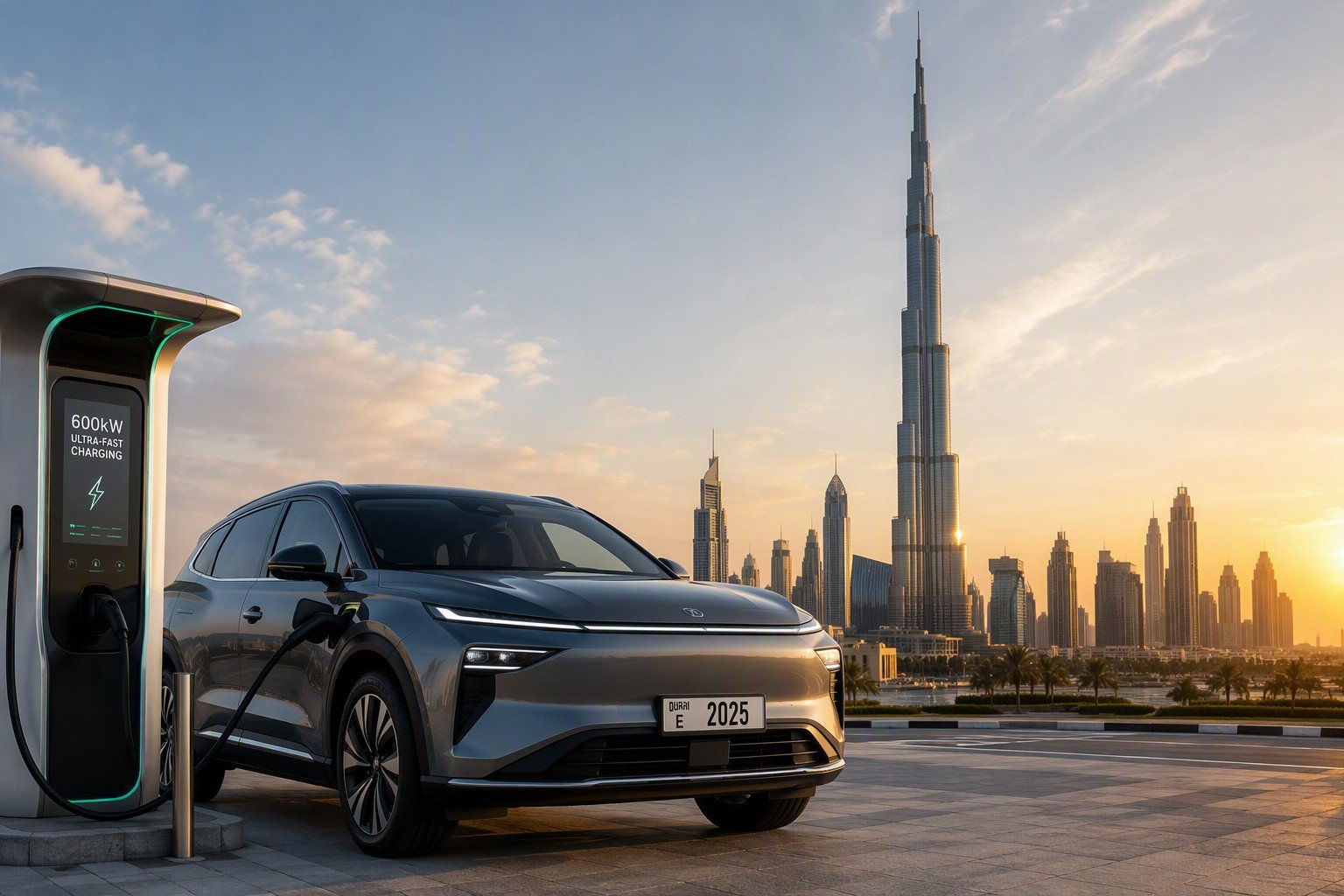
The United Arab Emirates is the natural entry point. Dubai and Abu Dhabi combine high purchasing power with a government push toward electric mobility: the UAE targets net-zero by 2050 and has invested heavily in charging networks, EV incentives and green taxi fleets. With running costs and total cost of ownership increasingly attractive, Chinese EVs - from family sedans to premium SUVs - have become a common sight. The UAE also serves as a regional re-export hub: vehicles landed at Jebel Ali are distributed across the Gulf, the Levant and even parts of Africa.
Saudi Arabia and the Wider GCC: Beyond Oil
Saudi Arabia is the largest market in the region, and its Vision 2030 programme has set ambitious targets for electric mobility, including a push for local EV manufacturing. Qatar, Oman, Bahrain and Kuwait are following with their own electrification strategies and modernisation plans. Across the region, governments are diversifying away from oil revenues, and automotive is a visible part of that transition. GCC consumers, long known for large SUVs and performance cars, are now open to Chinese brands that combine modern technology with competitive pricing.
Why Chinese Brands Are Winning
Three factors explain the surge. First, technology: Chinese EVs lead in battery range, smart cabins and fast-charging capability, which matters in a region where summer heat tests both batteries and air-conditioning systems. Second, price: Chinese models undercut legacy rivals at every segment while offering generous equipment, which appeals to both retail buyers and fleet operators. Third, supply: the GCC drives on the right, so left-hand-drive Chinese production lines can ship directly with no modification, shortening delivery times and lowering costs. Add growing CKD assembly plans and expanding dealer networks, and the momentum becomes structural rather than temporary.
What Importers and Dealers Should Prepare
For B2B importers, entry into the GCC is manageable but requires preparation. Vehicles must meet Gulf Standard (GSO) homologation requirements, and each market adds its own approval layers - SABER/SASO certification in Saudi Arabia, ECAS registration in the UAE, and similar schemes in other member states. Right-hand drive is not needed, but heat-resistant specifications, English and Arabic documentation, and a clean ownership history are essential. Logistics run smoothly through Jebel Ali (Dubai), Khalifa Port (Abu Dhabi) and Dammam (Saudi Arabia), with relatively low import tariffs within the GCC common external tariff. Working with an export partner that handles certification, documentation and shipping is the fastest route to market.
Key Takeaways
- The UAE is the GCC's EV gateway and regional re-export hub.
- Saudi Vision 2030 and GCC electrification plans are opening the largest markets.
- Chinese EVs and SUVs win on technology, price and direct left-hand-drive supply.
- GSO homologation plus market-specific approvals (SABER, ECAS) are mandatory.
- Jebel Ali and Gulf ports provide efficient, low-tariff logistics.
Entering the Gulf market? JINGSUN exports new and used vehicles to the UAE, Saudi Arabia and across the GCC - with full documentation and logistics support.