

The Domestic Catalyst: NEV Penetration Hits Historic Highs
The global automotive landscape in 2026 is undergoing a profound transformation, driven largely by the rapid electrification of the world’s largest auto market. For international buyers, traders, and importers, understanding the domestic shifts in China is critical, as they directly dictate export availability, pricing, and vehicle technology. According to the latest forecasts from the China Passenger Car Association (CPCA), the domestic market is witnessing an unprecedented shift in powertrain preferences.
Following a strong mid-year surge in June, the Chinese market is experiencing a traditional seasonal lull in July. However, New Energy Vehicles (NEVs) are demonstrating remarkable resilience. Retail sales of NEVs are projected to reach roughly 980,000 units in July, pushing the market penetration rate to a historic high of 64.5%. In contrast, Internal Combustion Engine (ICE) vehicles are facing a severe structural decline, with H1 2026 sales sliding by 26.4% to 3.996 million units.
This domestic dominance of NEVs has profound implications for global sourcing. As Chinese manufacturers scale up NEV production to meet overwhelming domestic demand, the resulting economies of scale are making these vehicles highly cost-competitive on the international stage. For global dealers, this means access to advanced, affordable electrified vehicles is expanding rapidly, while traditional ICE inventory from Chinese brands is becoming increasingly scarce.
Global EV Sales and Regional Divergence
The shift toward electrification is not confined to China; it is a global phenomenon, albeit with distinct regional pacing. In Q1 2026, global EV sales reached approximately 3.7 million units, marking a 12% year-over-year increase. The regional breakdown highlights diverse market maturities: China commands a dominant 57% share, followed by Europe at 18%, North America at 12%, and Korea at 2%.
Europe presents a complex picture for importers. While Q1 2026 EV sales grew by 15% to 680,000 units, achieving a 17.5% penetration rate, the region is grappling with strict CO2 compliance. Most automakers missed their Q1 targets, facing an estimated €5-8 billion in fines. Furthermore, regional divergence is stark: the UK and Italy saw robust growth (+22% and +28% respectively), while Germany and France experienced slight contractions. For B2B buyers targeting the European market, navigating these regulatory pressures and varying country-level incentives is essential for profitable sourcing.
China's Export Surge: Redefining Global Sourcing Hubs
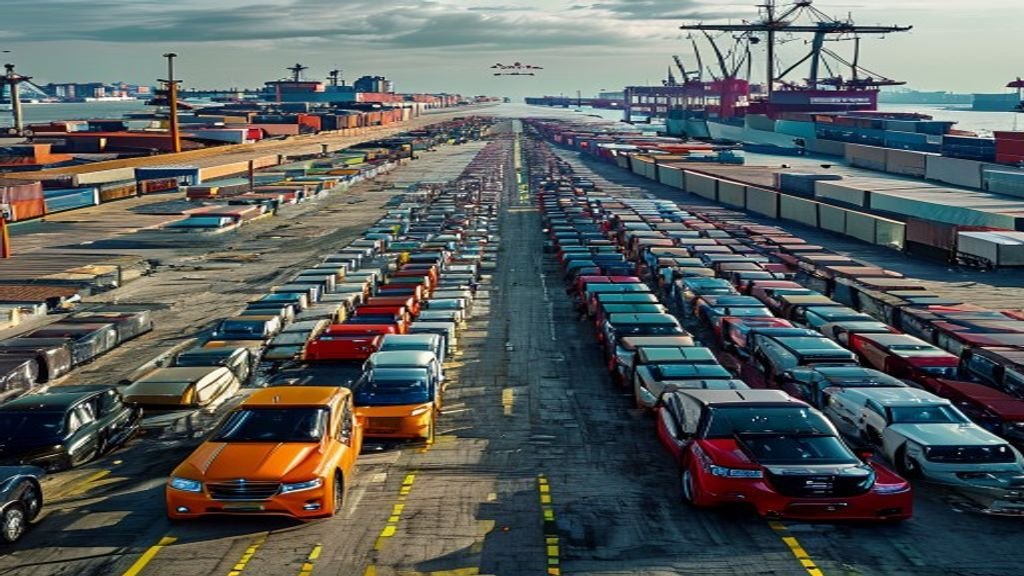
As domestic ICE sales contract and NEV production scales, Chinese automakers are aggressively expanding their global footprint. In Q1 2026, China’s automotive exports reached 650,000 units, a robust 30% increase year-over-year. The geographic focus of these exports is shifting, with Mexico, Brazil, and Southeast Asia emerging as the top three destination markets.
This surge is supported by broader macroeconomic trends. The global automotive industry market size, valued at $4.35 trillion in 2025, is projected to grow to $8.50 trillion by 2035, exhibiting a CAGR of 6.92%. Emerging markets in Latin America and Southeast Asia are driving a significant portion of this growth, creating lucrative opportunities for traders who can efficiently source and distribute vehicles to these regions.
Crucially, the Chinese export model is evolving. Industry leaders at the 2026 China Auto Forum emphasized that the going-global strategy has transitioned from single-product exports to localized deep cultivation across the entire industrial chain. While complete knock-down (CKD) kits and localized assembly are rising, the immediate export volume of fully built units (FBUs) remains a massive opportunity for overseas dealers looking to secure immediate inventory.
Strategic Sourcing: Electrification and AI Intelligence
When sourcing vehicles for international markets, the criteria for selection have expanded beyond traditional metrics of reliability and fuel efficiency. Industry consensus identifies electrification as the key enabler for Chinese automakers going global, but AI-driven intelligence and self-developed capabilities are the core barriers to winning in the global market.
Importers must now evaluate vehicles based on their software-defined capabilities, advanced driver-assistance systems (ADAS), and smart cabin integrations. The integration of smart technologies is particularly appealing in the Asia-Pacific region, where rapid automotive innovation is highly valued by consumers. Furthermore, as global markets become more saturated, the technological edge provided by AI and advanced battery management systems will differentiate successful dealers from their competitors.
However, traders must also navigate rising trade barriers. The European Union’s countervailing duties, which have been active since February with tariffs ranging from 17% to 38%, significantly impact the landed cost of Chinese EVs. While some manufacturers are accelerating local production plans, such as BYD’s upcoming Hungary plant, importers targeting the EU market must carefully recalculate their margins and consider alternative sourcing hubs or vehicle segments to maintain profitability.
Actionable Insights for Global Dealers and Importers
To capitalize on these 2026 industry trends, international automotive buyers and traders should consider the following strategic adjustments:
- Capitalize on NEV Cost Advantages: With China's domestic NEV penetration exceeding 64%, leverage the massive production scale to source highly competitive, technologically advanced electric and plug-in hybrid vehicles for emerging markets.
- Diversify Regional Focus: While Europe remains a high-value market, be mindful of the 17-38% tariffs and CO2 compliance costs. Simultaneously, increase sourcing volumes for high-growth, tariff-friendly hubs like Mexico, Brazil, and Southeast Asia.
- Prioritize Smart Features: When selecting models for import, prioritize vehicles equipped with AI-driven intelligence and advanced software ecosystems, as these are now the decisive factors in global consumer purchasing behavior.
- Balance the Powertrain Mix: Given the 26.4% decline in China's domestic ICE sales, secure long-term supply contracts for traditional ICE and hybrid models now, as domestic inventory shifts heavily toward electrification, potentially making ICE exports scarcer and more expensive in the near future.
Conclusion
The year 2026 marks a definitive pivot in the global automotive trade. The record-breaking NEV penetration in China, combined with a 30% surge in export volumes, is fundamentally rewriting the rules of international auto sourcing. For global dealers, importers, and traders, success in this new landscape requires agility. By aligning sourcing strategies with the realities of electrification, AI integration, and shifting regional trade dynamics, B2B buyers can secure a competitive advantage in a rapidly evolving $8.5 trillion global market.