

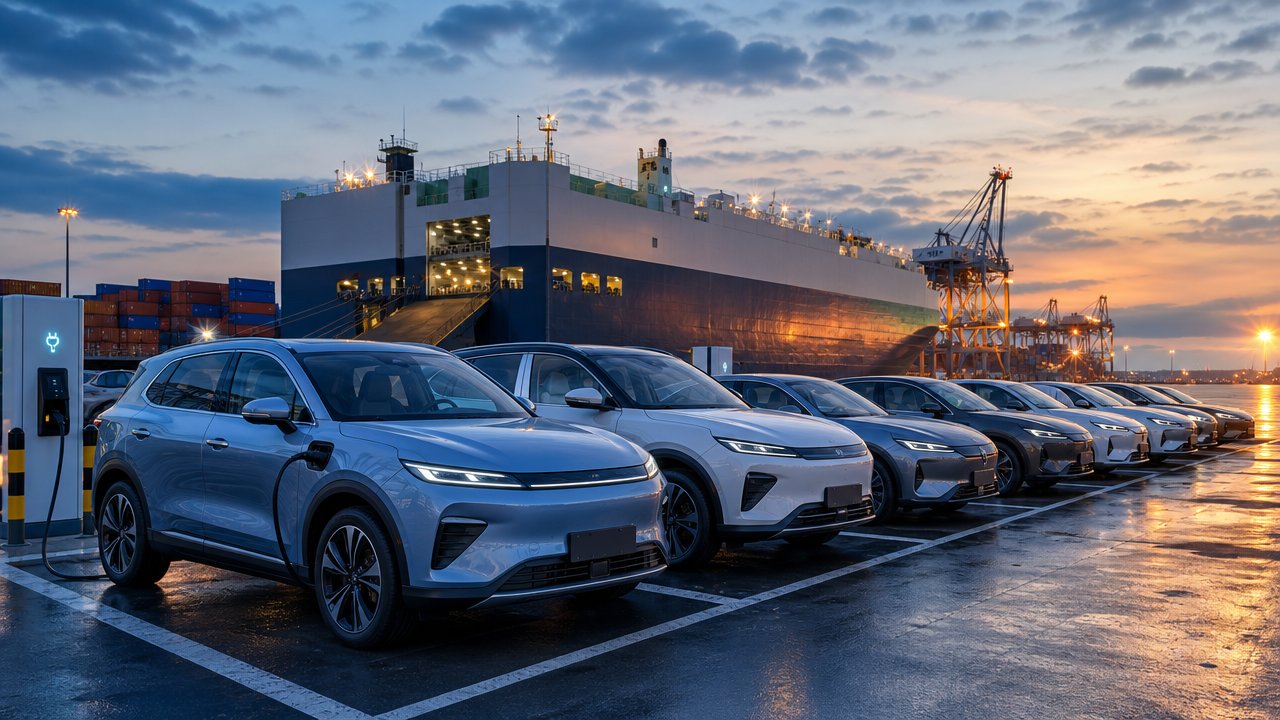
Lightly Used EVs Find a Second Life Overseas: The Used NEV Export Wave from China
China's new-energy vehicle market has reached a turning point. In June 2026, electric and plug-in hybrid cars accounted for more than three out of every five new cars sold in the country, and rapid innovation cycles from brands such as BYD, XPeng and Xiaomi mean cars are replaced while still nearly new. The result is a fast-growing pool of lightly used EVs - and a new export wave taking them to markets across Central Asia, Africa, the Middle East, Southeast Asia and Latin America.
Why Lightly Used EVs Are Piling Up in China
China exported 2.615 million NEVs in 2025, up 103.7 percent year on year according to official data, and pure EV exports reached 1.52 million units. But the domestic story is just as important: with EV penetration above 60 percent, aggressive price competition and frequent model refreshes, owners trade up quickly, and well-maintained two-to-three-year-old EVs enter the used market at attractive prices. For overseas buyers, these cars offer modern technology, long range and sharp pricing - often at a fraction of the cost of a comparable new vehicle.
Where the Demand Is Growing
Demand is strongest in markets where charging infrastructure is developing and buyers want premium technology at used-car prices. Central Asia and the Caucasus, the Gulf states, Southeast Asia, Latin America and parts of Africa are all seeing rising interest in used and near-new EVs. Exporters based near China's southern ports - Shenzhen, Hong Kong and Guangzhou Nansha - are already building dedicated businesses around used Chinese EVs, and the segment is professionalising quickly.
The Three Challenges Exporters Must Solve
Success in used EV exports depends on handling three things well. First, battery health: a transparent battery inspection and a clear state-of-health report build buyer confidence and reduce disputes - buyers should always request documented capacity and SOH data before purchase. Second, compliance and logistics: lithium batteries require careful shipping handling and documentation under international dangerous-goods rules, and each destination market applies its own registration and homologation requirements. Third, after-sales: because used EVs lack factory warranties in most export markets, a clear inspection record, honest condition disclosure and an agreed returns or support policy are essential commercial tools.
What This Means for Importers and Dealers
For importers, lightly used EVs are an opportunity to offer electric technology at accessible price points in markets where new EVs remain expensive. The keys are disciplined sourcing - verified accident history, genuine mileage and tested batteries - and honest grading that matches local expectations. Markets with growing charging networks and fuel-price pressure are the best first targets, and dealers who build trust around battery transparency will outlast competitors who sell on price alone.
Key Takeaways
- Record EV penetration and fast model cycles in China are creating a large pool of lightly used EVs.
- Used and near-new EVs are flowing to Central Asia, the Gulf, Southeast Asia, Latin America and Africa.
- Battery health inspection and transparent SOH reporting are the foundation of trust.
- Lithium-battery shipping rules and destination homologation must be handled professionally.
- Honest grading and after-sales support give dealers a durable edge over price-only sellers.
Looking for quality used EVs? JINGSUN exports verified new and used vehicles worldwide, with transparent inspection and export support - contact us to discuss your market.