Introduction: The H1 2026 Automotive Landscape
The first half of 2026 has presented a complex paradox for the global automotive industry. While overall global vehicle sales experienced a 2.8% decline, China's auto exports surged by an unprecedented 65.3%, reaching 5.096 million units. For international dealers, traders, and importers across Africa, the Middle East, Southeast Asia, and South America, understanding this divergence is critical for strategic sourcing and inventory planning.
Global Market Contraction: Why Sales Fell in H1 2026
According to recent industry reports, global vehicle sales fell by 2.8% in the first half of 2026. Among the world's 20 largest carmakers, 14 recorded a drop in both output and sales. This generalized decline is driven by macroeconomic headwinds, including persistent economic uncertainty, geopolitical trade tensions, and rising financing costs that have made vehicle loans more expensive for consumers.
Industry experts warn that this era of market disruption will likely lead to further consolidation, with weaker players forced to restructure or merge. However, this contraction is not uniform. Regions and segments embracing electrification and cost-effective manufacturing are seeing robust growth, signaling a clear shift in where B2B buyers should focus their procurement strategies.
China's Export Engine: Shattering Records in the First Half
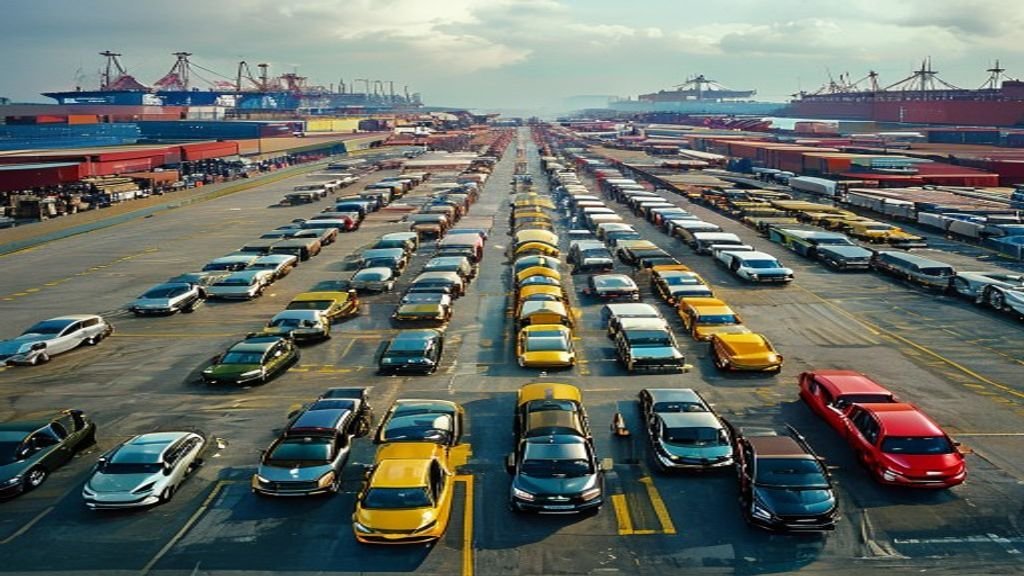
In stark contrast to the global slowdown, China's automotive export engine is operating at full throttle. Data indicates that in the first half of 2026, China's complete vehicle exports surged 54% in value to $91.8 billion, pushing the full-year trajectory well past the $100 billion threshold. In terms of volume, exports hit 5.096 million units, a 65.3% year-on-year increase, marking the first time semi-annual exports have breached the 5 million mark. June alone saw a massive 75.1% surge to 1.037 million units shipped.
This explosive growth is heavily driven by the "New Three" exports—electric vehicles, lithium batteries, and solar cells. Specifically, EV exports reached $52.1 billion, a 75.1% increase. For global B2B buyers, this signals an unparalleled opportunity to source high-quality, technologically advanced vehicles at competitive price points, leveraging the immense economies of scale achieved by Chinese manufacturers.
Regional Shifts: EV Penetration and Powertrain Divergence
The global market is also witnessing rapid shifts in powertrain preferences, which directly impacts sourcing strategies for international importers.
Europe: Electrification Hits a Tipping Point
Electrification is accelerating rapidly in European markets. In June 2026, EVs outsold gasoline and diesel cars in Germany for the first time in history, with 84,057 EV sales compared to 60,796 gasoline and 33,862 diesel units. Similarly, in the UK, EVs surpassed petrol car sales in the 12-month period to May 2026. However, European automakers face severe CO2 compliance pressures, with most missing Q1 targets and facing billions in potential fines, creating opportunities for imported EVs to fill market gaps.
Asia: Hybrid Dominance and EV Scale
China continues to dominate the EV space, accounting for 57% of the approximately 3.7 million global EVs sold in Q1 2026. Meanwhile, hybrid dominance remains strong in Japan, where hybrids captured a 48% market share in Q1, with 340,000 units sold. Korea also saw strong hybrid demand, with 165,000 units sold in Q1, up 15% year-on-year. For importers in regions with developing charging infrastructure, sourcing a mix of BEVs and PHEVs is a prudent strategy.
Emerging Markets: Commercial Electrification
Infrastructure is evolving to support commercial shifts. For instance, a 1,200-kilometer zero-emission freight corridor is being developed in Colombia, partnering with major logistics and EV firms. This demonstrates a growing commitment to commercial electrification in South America, opening new avenues for electric truck and commercial vehicle sourcing.
Strategic Sourcing Implications for Global Importers
How should international importers and dealers respond to these macroeconomic and regional trends?
- Diversify Powertrain Portfolios: While EVs are surging in Europe and China, hybrid and internal combustion engine (ICE) vehicles remain crucial for markets with nascent charging networks. Sourcing a diverse mix ensures broader market appeal across Africa and the Middle East.
- Leverage Chinese Supply Chain Scale: With China's export volume exceeding 1 million units in a single month, economies of scale are driving down costs. Importers should capitalize on the wide array of new models and competitive pricing resulting from domestic market efficiencies.
- Navigate Tariffs and Compliance: The regulatory landscape is tightening. EU countervailing duties on Chinese EVs are active, prompting manufacturers to establish local production. Importers must stay updated on regional compliance, such as battery regulations and cybersecurity standards, to avoid customs delays.
- Focus on Commercial and Fleet Electrification: The development of zero-emission freight corridors in regions like Latin America indicates a future demand for electric commercial vehicles. Dealers should begin educating their fleets on the total cost of ownership (TCO) benefits of electric trucks and vans.
Conclusion: Adapting to the New Normal in Auto Trade
The H1 2026 data paints a picture of a bifurcated global auto market. While traditional sales face macroeconomic headwinds, the cross-border flow of vehicles—led by China's record-breaking export volumes and the global shift toward electrification—offers immense opportunities for agile B2B buyers. By aligning sourcing strategies with these regional powertrain shifts and leveraging the scale of Asian manufacturing, international traders can secure a competitive edge in the evolving global automotive landscape.