H1 2026 Export Data: A Historic Milestone for Global Sourcing
The global automotive trade landscape is experiencing a seismic shift, and the first half of 2026 has set a new benchmark for international vehicle sourcing. According to data released by the China Association of Automobile Manufacturers (CAAM), China’s auto exports have not only defied domestic market pressures but have also established historic milestones. For international dealers, traders, and importers across Africa, the Middle East, Southeast Asia, and South America, these figures represent a critical indicator of supply availability and market momentum.
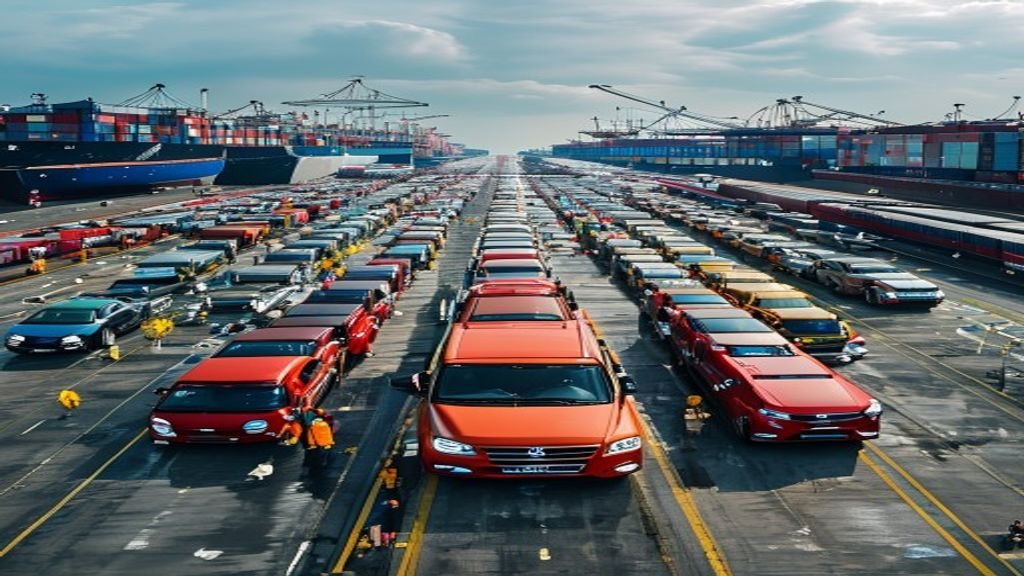
In the first half of 2026, total auto exports reached an impressive 5.096 million units, marking a substantial 65.3% year-over-year increase. The momentum accelerated in June, with exports surpassing the 1 million unit threshold for the first time in history, hitting 1.037 million units. This represents a staggering 75.1% year-over-year surge and an 11.6% month-over-month increase. While the domestic market faced headwinds—with new vehicle sales in China declining by 20.2% year-over-year in the first half due to subsidy adjustments and market saturation—export volumes have provided a robust stabilizing force for the industry.
NEV Surge and ICE Resilience: A Dual-Track Export Strategy
For B2B buyers, understanding the composition of these export volumes is crucial for aligning with regional demand. The H1 2026 data reveals a thriving dual-track strategy encompassing both New Energy Vehicles (NEVs) and traditional Internal Combustion Engine (ICE) vehicles.
The NEV Export Boom
NEV exports continue to be a primary growth engine. In the first half of the year, NEV exports reached 2.355 million units, more than doubling (up 1.2x year-over-year). In June alone, NEV exports hit 523,000 units, up 1.6 times year-over-year. This surge is heavily supported by expanding production capacity, competitive manufacturing, and rising global demand for electrified mobility. For importers in regions with developing charging infrastructure or specific government incentives, the sheer volume of available NEVs presents significant sourcing opportunities.
ICE Vehicles: The Steady Workhorse
Despite the electrification narrative, conventional fuel vehicles remain a cornerstone of global auto trade. H1 2026 saw conventional fuel vehicle exports total 2.741 million units, reflecting a solid 35.5% year-over-year growth. June figures also remained strong, with 514,000 ICE units exported. For markets in Africa, the Middle East, and parts of South America where ICE vehicles still dominate due to infrastructure and cost factors, this steady supply growth ensures that dealers can meet persistent local demand without supply chain bottlenecks.
Reshaping Global Supply Chains and Navigating Trade Dynamics
China’s expanding vehicle exports are doing more than just moving metal across borders; they are fundamentally reshaping global supply chains and trade dynamics. The integration of automotive manufacturing with digital technologies and semiconductor components means that vehicle exports are now deeply tied to broader tech supply networks. As international trade patterns evolve, global industries are reassessing their supply chain strategies to build more resilient and diversified networks.
This shift is also evident in the strategic realignments of legacy automakers. Recognizing the rapid innovation in China's NEV sector, European giants are deepening their cooperation. Volkswagen Group, for instance, has expanded its full-process research and development center in Hefei, shortening development cycles by approximately 30%. Similarly, Bosch has announced multi-billion-yuan investments in Suzhou to strengthen intelligent driving innovation. These moves underscore that the global auto industry is moving toward deeper, two-way cooperation rather than isolated competition.
However, international traders must also navigate emerging geopolitical and regulatory friction. In the United States, first-half 2026 new vehicle sales fell 2.8% year-over-year, with the Seasonally Adjusted Annual Rate (SAAR) at 15.9 million units, reflecting affordability pressures and consumer hesitancy. Furthermore, the U.S. Senate is advancing the Connected Vehicle Security Act of 2026, which seeks to ban the importation and sale of connected vehicles and software linked to China. Such regulatory shifts require exporters to maintain strict compliance and diversify their target markets toward more welcoming regions in the Global South and Europe.
Strategic Sourcing Insights for International Dealers and Importers
As the industry navigates this complex environment, financial and industry institutions remain highly optimistic about the long-term trajectory of automotive exports and high-end manufacturing. For global buyers, the current market conditions offer several strategic advantages:
- Diversified Portfolios: With both NEV and ICE exports growing robustly, importers can balance their inventory to cater to both early-adopting urban centers and traditional rural or developing markets.
- Technological Integration: The push for intelligent driving and L3 autonomous policies in China means that exported vehicles are increasingly equipped with advanced software and hardware, offering higher value propositions for premium segments in emerging markets.
- Supply Chain Reliability: The sheer scale of China's manufacturing capacity ensures that despite global semiconductor fluctuations, the baseline supply of vehicles and critical components remains stable for long-term B2B contracts.
Conclusion
The H1 2026 data clearly illustrates that China’s automotive export sector is not just surviving global economic shifts but is actively driving them. With monthly exports breaking the 1 million unit barrier and a balanced growth in both NEVs and ICE vehicles, the foundation is set for a record-breaking year. For international buyers, traders, and dealers, aligning sourcing strategies with these macro trends—while carefully navigating regional compliance and trade policies—will be the key to maximizing profitability in the 2026 global auto market.