

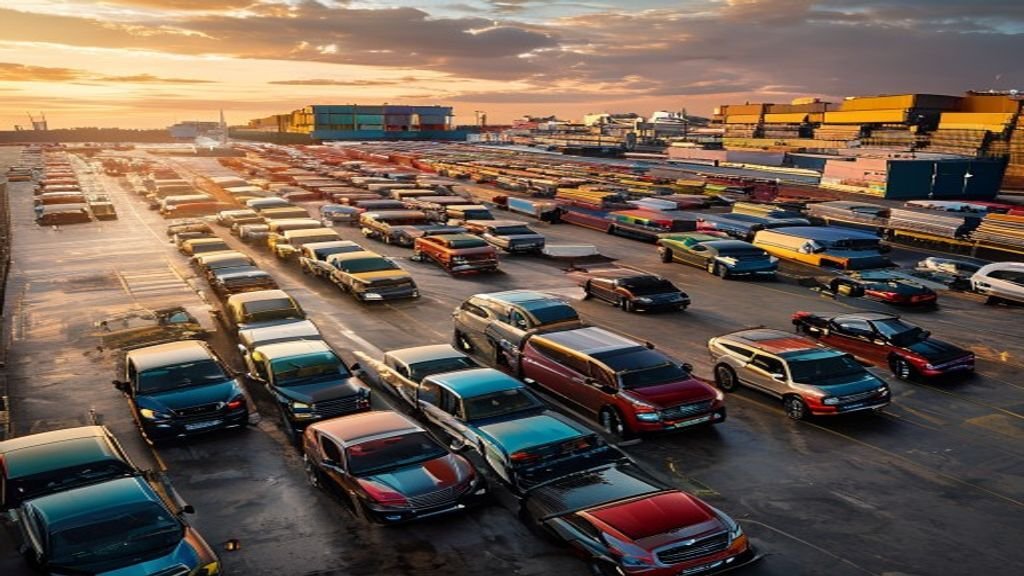
The first half of 2026 has marked a transformative period for the global automotive trade landscape. According to recent data from the Ministry of Commerce, China's automotive exports reached an impressive 635.82 billion RMB in the first six months of 2026, representing a robust year-on-year growth of 48.3%. These vehicles are now reaching over 210 countries and regions worldwide. For international B2B buyers, traders, and dealers, understanding the underlying drivers of this surge is critical for strategic sourcing.
Unprecedented NEV Export Growth and European Market Penetration
New Energy Vehicles (NEVs) continue to be the primary engine of export growth. In the first half of 2026, NEV exports alone accounted for 360.68 billion RMB, surging by 68.7% compared to the previous year. This exponential growth is closely mirrored by rising demand in key overseas markets, particularly in Europe.
Data from the European Automobile Manufacturers' Association (ACEA) reveals that battery-electric cars captured a 20.7% share of the EU market in the first half of 2026, up significantly from 15.6% a year earlier. A total of 1,220,890 new battery-electric cars were registered across the region. Chinese brands are capitalizing on this shift; for instance, Leapmotor witnessed its European registrations jump by an astonishing 526.7% year-on-year during this period.
However, the export model is also evolving. To navigate changing trade dynamics and localize supply chains, strategic partnerships are emerging. A notable example is the joint venture between Geely Auto and Ford, which will see Geely building electric SUVs, including the EX5, at Ford's Valencia plant in Spain. With Ford holding a 66% stake and Geely 34%, production is slated to begin in 2028. This reflects a broader industry shift where Chinese NEV capabilities are supporting Europe's green transition while expanding market presence through localized manufacturing.
The Pickup Truck Boom: A Prime Opportunity for Importers
While NEVs dominate the headlines, the commercial and lifestyle pickup truck segment is experiencing a massive resurgence, presenting a lucrative sourcing opportunity for importers in Africa, the Middle East, and South America.
According to the China Passenger Car Association, the domestic pickup market sold 62,000 units in June 2026, a 29% year-on-year increase and a 3% month-on-month rise, marking the second-highest June figure in the past five years. For the first half of the year, total pickup sales reached 343,000 units, an 18% increase. Crucially, industry reports highlight that export trends for pickups are exceptionally strong. As global demand for versatile, durable work and lifestyle vehicles grows, Chinese manufacturers are well-positioned to supply high-quality, cost-effective pickup models to emerging markets.
Strategic Global Localization: Thailand and Beyond
The globalization of automotive manufacturing is accelerating, with major players establishing regional hubs to optimize export logistics and tariff advantages. Mitsubishi Motors recently announced a substantial investment of 16 billion THB (approximately $475 million) to expand its hybrid electric vehicle (HEV) production capacity in Thailand. This move is designed to solidify Thailand's position as a core manufacturing and export base for the region.
For B2B buyers, this localization trend means that sourcing networks are diversifying. Importers can increasingly look beyond traditional direct exports from China and explore vehicles produced in regional hubs like Thailand and Spain, which may offer distinct advantages in terms of trade agreements, shipping routes, and localized compliance.
Domestic Market Pressures Fuel Export Competitiveness
The aggressive push into international markets is also driven by domestic market dynamics. According to the China Automobile Dealers Association (CADA), the domestic passenger car inventory reached 3.43 million units by the end of June 2026, with dealer channel inventory standing at approximately 2.5 million units. Despite 2026 being a "product year" with massive new launches, the domestic market has not absorbed the supply as quickly as anticipated, leading to intense price competition.
Furthermore, while the penetration of advanced driver-assistance systems (ADAS) is high—with L2 systems reaching 70% and Navigation on Autopilot (NOA) features exceeding 30% in new cars—actual usage rates remain relatively low, with over 70% of owners rarely using them. These domestic pressures and high production capacities translate into highly competitive pricing and advanced feature sets for export vehicles, making Chinese cars exceptionally attractive to cost-conscious B2B buyers in emerging markets.
Quality Assurance and Compliance: What Buyers Must Know
As export volumes scale, maintaining rigorous quality and safety standards remains a top priority. The Chinese Ministry of Industry and Information Technology (MIIT) has recently intensified its oversight, conducting on-site inspections at major production facilities, including GAC Aion and Xpeng. These inspections focus heavily on the safety assurance capabilities of intelligent connected vehicles, design and production consistency, and battery safety.
This proactive regulatory environment is vital for international buyers. It ensures that the vehicles entering global markets meet stringent safety benchmarks. However, it also means that compliance is strictly enforced. For example, Xpeng recently initiated a recall of 33,473 X9 vehicles due to manufacturing variations in the front air springs that could affect air tightness in high-temperature and high-humidity conditions. B2B traders must work closely with suppliers who demonstrate robust quality control systems and reliable after-sales support networks to mitigate any potential risks.
Battery Supply Chain Dominance Secures NEV Exports
The backbone of the NEV export surge lies in the robust battery supply chain. CATL, a global leader in power batteries, reported a stellar first half of 2026, with revenues reaching 276.91 billion RMB, up 54.8% year-on-year. More importantly, the net profit attributable to shareholders hit 43.28 billion RMB, a 41.98% increase. This financial and technological strength ensures that the global supply of high-density, reliable EV batteries remains stable, directly supporting the sustained export growth of Chinese new energy vehicles.
Conclusion: Navigating the New Era of Auto Trade
The first half of 2026 underscores a dynamic and rapidly evolving global automotive trade environment. With overall exports surging by 48.3% and NEV exports jumping by 68.7%, the opportunities for international buyers are vast. From the booming pickup truck segment to strategic manufacturing partnerships in Europe and Thailand, the avenues for sourcing are diversifying. At sin-auto.com, we remain committed to helping global dealers and importers navigate these shifts, ensuring access to high-quality, compliant, and competitively priced vehicles from China's thriving automotive industry.