The Great Divergence: Domestic Contraction Meets Export Surges
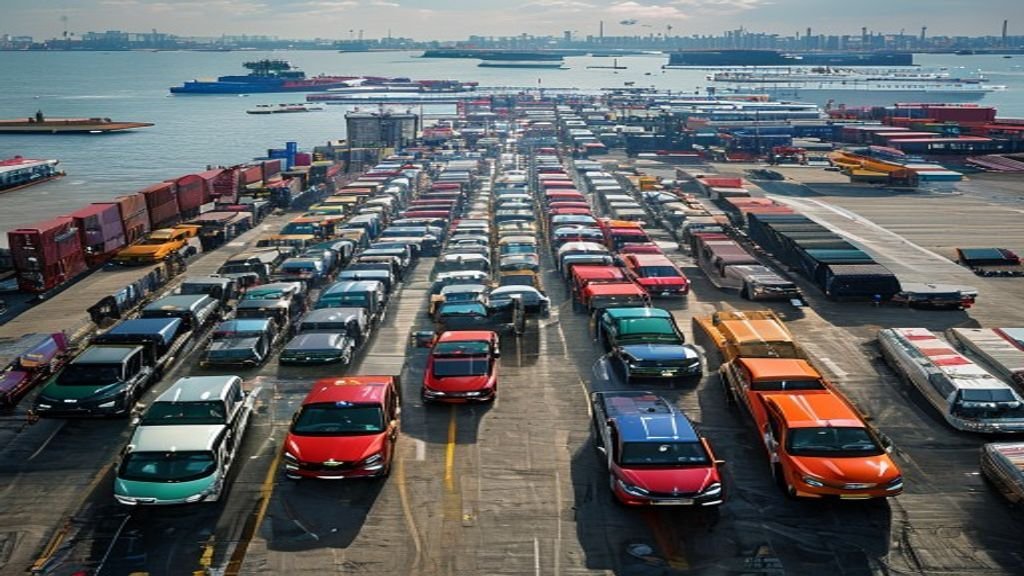
The first half of 2026 has presented a stark contrast in the global automotive landscape. While the Chinese domestic market experienced a historic contraction, cross-border trade volumes have shattered previous records, creating unprecedented sourcing opportunities for international B2B buyers, dealers, and importers.
According to recent industry data, China's total domestic auto sales in H1 2026 fell by 21.1% to 9.921 million units, driven by fluctuating oil prices, policy shifts, and a severe domestic price war that eroded dealer margins. However, this domestic cooling has directly fueled an aggressive pivot toward international markets. In the same period, China's automobile exports surged by 65.3% to 5.096 million units. Crucially for global buyers focusing on the energy transition, new energy vehicle (NEV) exports reached 2.355 million units, accounting for a massive 46.2% of total export volume.
For global traders and importers, this divergence signals a highly competitive supply environment. With domestic manufacturers eager to secure overseas market share, the availability of both new and used vehicles for export has expanded significantly, offering favorable procurement conditions for international dealers.
Redefining the "Good Car": The Global Shift Towards Value and Technology
Understanding the end-consumer is critical for B2B inventory planning. The McKinsey 2026 Mobility Consumer Pulse report reveals a profound reset in global buyer psychology. Economic pressures are reshaping purchasing behaviors, with 32% of global respondents delaying purchases and 45% considering smaller vehicles to manage budgets.
More importantly, the definition of a "good car" has evolved. Approximately 50% of global buyers now operate with a budget under $40,000. Yet, budget constraints have not lowered expectations; instead, 60% of consumers prioritize "value for money"—demanding higher technology, performance, and quality at accessible price points. The era of simple price wars is ending, replaced by a "value war" where cost-effectiveness and feature density are paramount.
Furthermore, smart technology is no longer a luxury. Advanced Driver Assistance Systems (ADAS) and digital cockpit experiences have transitioned from bonus features to essential purchasing criteria. In China, 50% of consumers are willing to switch brands for better autonomous driving capabilities. For importers, sourcing vehicles equipped with robust ADAS and intuitive software ecosystems is now a mandatory strategy to capture modern buyers.
Regional Market Spotlight: Navigating Diverse Global Demands
Southeast Asia: The EV and Import Boom
Southeast Asia continues to emerge as a high-growth corridor for auto imports. Vietnam, in particular, is leading the charge. In H1 2026, Vietnam's battery electric vehicle (BEV) sales surged by 71% to 115,986 units. The broader Vietnamese auto market grew by 15%, heavily driven by imported and hybrid vehicles. For regional dealers, sourcing affordable EVs and efficient hybrids from established Asian manufacturing hubs presents a highly lucrative avenue.
Europe: Record EV Adoption Amidst Tariff and Trust Hurdles
Europe remains a critical market for electrified vehicles. Q1 2026 data indicates 680,000 EVs were sold in Europe, a 15% year-over-year increase, pushing penetration to 17.5%. PwC reports highlight record levels of e-mobility adoption driven by environmental concerns and improving infrastructure.
However, the European market presents complex challenges for importers. The EU has implemented countervailing duties on Chinese EVs ranging from 17% to 38%. Additionally, while brand recognition is high—with 54% of European consumers viewing Chinese automakers as BEV technology leaders—actual market conversion lags. Chinese brands currently hold only about 12% market share in Germany and 21% in the UK. The gap is largely attributed to a lack of brand trust, data security concerns, and insufficient after-sales service networks. Importers targeting Europe must prioritize suppliers who can guarantee robust local support and compliance.
Global Q1 Overview: China's Dominance in NEV Production
On a macro level, global EV sales reached approximately 3.7 million units in Q1 2026, up 12% year-over-year. China's dominance in this sector is absolute, commanding a 57% global share, followed by Europe (18%) and North America (12%). This production concentration means that global supply chains for both new and used electrified vehicles will remain heavily anchored in Chinese manufacturing and export ecosystems.
Strategic Sourcing Recommendations for B2B Importers and Dealers
To capitalize on these H1 2026 trends, automotive foreign trade companies, importers, and dealers should adopt the following strategic adjustments:
- Capitalize on the Supply Surplus: Leverage the current domestic market contraction in major manufacturing hubs to negotiate better procurement terms for both new and used vehicles. The aggressive push for export volumes creates a buyer's market.
- Prioritize "Value-Dense" Vehicles: Shift inventory focus toward models that offer premium features—such as advanced ADAS, smart cabins, and extended range—at the sub-$40,000 price point to align with the 60% of consumers demanding high value for money.
- Diversify Target Markets: While Europe offers high margins, tariff barriers and after-sales requirements are steep. Aggressively expand sourcing and sales networks in high-growth, tariff-friendly regions like Southeast Asia, Latin America, and the Middle East, where demand for affordable NEVs and hybrids is accelerating.
- Invest in After-Sales Ecosystems: For markets where brand recognition is high but trust is low (like Europe), partner with OEMs or third-party providers to establish reliable spare parts supply chains and service networks to convert brand awareness into long-term loyalty.
Conclusion
The first half of 2026 marks a definitive turning point in the global automotive trade. The transition from domestic price wars to global value competition requires B2B buyers to be more strategic than ever. By aligning sourcing strategies with the surging export volumes, the global demand for high-value smart vehicles, and the specific nuances of regional markets, international dealers and importers can secure a strong competitive advantage in the evolving automotive landscape.