

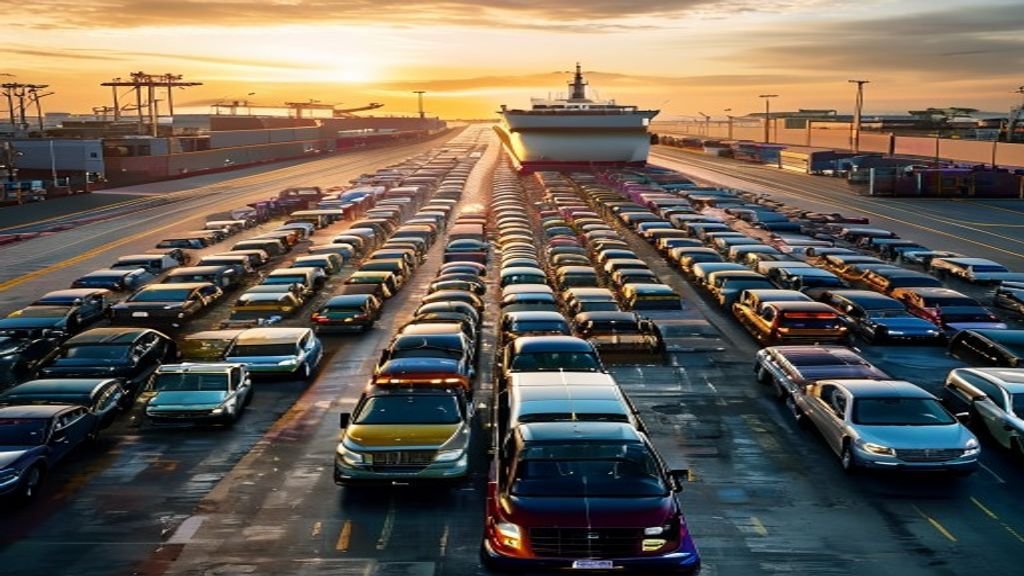
The global automotive trade landscape is undergoing a profound transformation in 2026. For international car buyers, traders, and importers across Africa, the Middle East, Southeast Asia, and South America, adapting to shifting supply chains and localized manufacturing strategies is no longer optional—it is essential for survival. Recent industry developments, from landmark joint ventures in Europe to aggressive localization targets in Southeast Asia, signal a new era of global auto sourcing.
Ford and Geely Forge European Alliance in Spain
In a landmark move to navigate Europe's complex regulatory and tariff environment, Ford Motor Company and Geely Automobile have announced a joint venture at the Valencia plant in Spain. This partnership is designed to produce next-generation multi-energy vehicles for the European market, with production slated to begin in 2028.
According to official announcements, the Valencia facility will manufacture a completely new multi-energy crossover for Ford, a new model in the Bronco family, and two electric SUVs under the Geely brand. The current production of the Kuga will continue without interruption.
Trade Implications for Global Buyers
- Supply Chain Stability: For importers sourcing vehicles or parts from European hubs, this JV ensures long-term factory utilization and supply chain stability in the region.
- Multi-Energy Flexibility: The focus on "multi-energy" platforms highlights a critical trend. While pure EVs dominate some markets, global dealers in regions with developing charging infrastructure must balance their inventory with hybrid and ICE options to meet diverse consumer demands.
Deepening Localization: Changan’s Ambitious Thai Strategy
While Europe sees strategic alliances, Southeast Asia is witnessing massive direct investments. Changan Automobile has outlined an aggressive roadmap for Thailand, aiming to become a primary ASEAN manufacturing hub. The company plans to exceed 70,000 annual sales in the Thai market by 2030, targeting the second position among Chinese brands.
Crucially for global sourcing, Changan is committing to deep localization. The company plans to launch a regional R&D center and achieve a local content rate of over 60% by 2028. Furthermore, they aim to expand their local workforce to 3,000 employees, with a localization rate exceeding 90% by 2030.
What This Means for Importers
For traders in Africa, Latin America, and the broader Asia-Pacific region, Thai-manufactured vehicles will likely offer highly competitive pricing due to localized supply chains and favorable regional trade agreements. Importers should anticipate a surge in regionally adapted, cost-competitive Chinese SUVs and sedans originating from Thailand.
Navigating New Trade Barriers and Policy Shifts
The redirection of global trade flows is heavily influenced by protectionist policies. In the United States, the Senate Commerce Committee recently advanced the "2026 Connected Vehicle Safety Act," which includes provisions to restrict vehicles from companies with more than 15% Chinese ownership. While the bill faces internal debate and further Senate review, it underscores the growing friction in traditional Western markets.
Consequently, Chinese OEMs are accelerating their pivot toward emerging markets. International buyers in the Middle East, Africa, and South America can expect increased inventory availability and aggressive pricing strategies as manufacturers seek to offset potential losses in restricted markets.
Domestic Data Signals Export Strength
China's domestic market continues to validate the technological maturity of its export products. In June 2026, the retail penetration rate of New Energy Vehicles (NEVs) in China reached 62.8%, meaning over six out of every ten new cars sold are electrified. Furthermore, the commercial sector is electrifying rapidly; NEV heavy-duty truck sales reached approximately 140,000 units in the first half of 2026, a massive 78.6% year-on-year increase, supported by 22 billion RMB in government subsidies for fleet renewals.
Opportunity: Importers focusing on commercial fleets and logistics in developing nations should closely monitor the secondary market and direct exports of Chinese NEV heavy-duty trucks, which are proving their durability at scale.
The Rising Importance of the Used EV Market
As new car markets mature and EV penetration accelerates, the secondary market is becoming a critical frontier for global trade. In Europe, the used EV platform Aampere recently secured €4.2 million in funding to expand its digital platform for cross-border used electric car sales. The platform utilizes self-learning algorithms for valuation and digital condition checks, facilitating dealer auctions across Europe.
Global Sourcing Insight: This digitalization of the used EV market is a trend that will inevitably spread to other regions. Importers in Africa and the Middle East, who heavily rely on the used vehicle sector, should prepare for a future where digital condition reports and standardized battery health checks become mandatory for cross-border transactions. Sourcing high-quality used EVs and hybrids from mature markets will become a lucrative niche as global emission standards tighten.
Supply Chain Realities: Raw Materials and Profit Pressures
Despite robust sales volumes, the industry is not immune to macroeconomic pressures. Industry reports indicate that rising raw material costs are dragging down profit margins for many Chinese automakers. This financial squeeze is evident globally: Tesla reported a 5% drop in net income to $1.11 billion for Q2 2026 despite a 26% revenue increase, while Porsche's supervisory board has approved a restructuring plan that may include up to 9,000 layoffs.
Strategic Sourcing in a Volatile Market
For B2B buyers, these margin pressures mean that vehicle pricing may fluctuate based on commodity markets. To mitigate risks, dealers should diversify their sourcing portfolios. For instance, Great Wall Motors (GWM) is actively expanding the Tank 300 lineup with new hybrid and diesel variants. Offering a mix of ICE, hybrid, and EV options allows dealers to hedge against battery material cost spikes and cater to markets where diesel or hybrid powertrains remain the pragmatic choice.
Conclusion: Adapting to the New Normal
The events of July 2026 clearly illustrate that the era of simple cross-border export is evolving into a complex web of localized manufacturing, strategic joint ventures, and multi-energy portfolios. Whether it is Ford and Geely sharing capacity in Spain, or Changan building a localized empire in Thailand, Chinese automakers are embedding themselves deeper into regional ecosystems.
For global dealers and importers, success in the second half of 2026 and beyond will depend on agility. Leveraging diverse sourcing channels, understanding regional trade agreements, and maintaining a balanced inventory of ICE, hybrid, and NEV vehicles will be the key to thriving in this dynamic global market.