

The Turning Point in Global Auto Market Share
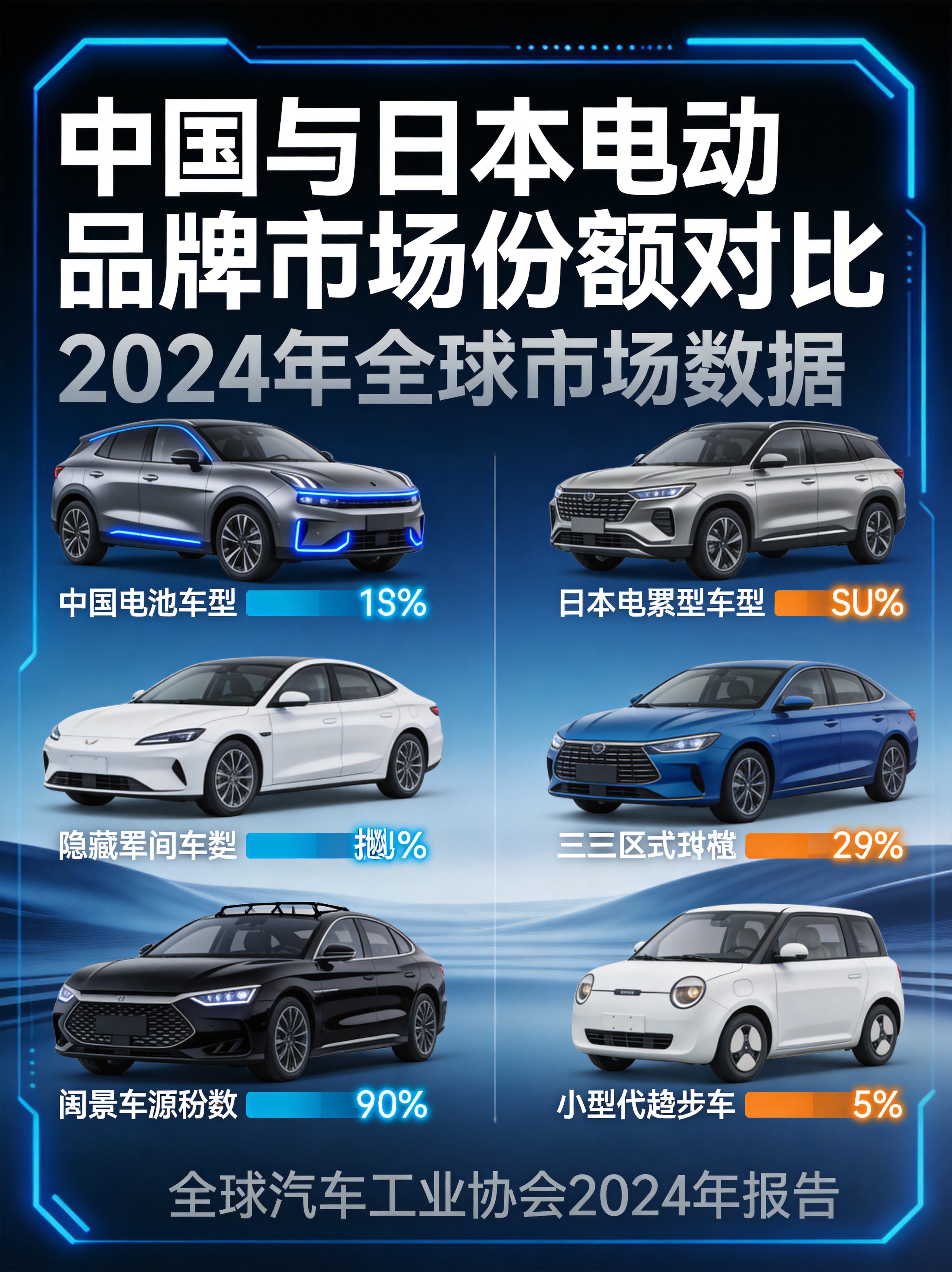
The global automotive industry is experiencing a fundamental realignment in market share dynamics. For the first time in recorded history, Chinese passenger car brands have captured a larger portion of Europe's monthly new-car market than their Japanese counterparts—a milestone that signals a profound shift in competitive advantage within the international auto trade landscape.
According to data released by the European Automobile Manufacturers' Association (ACEA), five major Chinese automakers sold a combined 138,410 vehicles across 31 European countries in May 2026, representing a 65 percent year-on-year surge. In contrast, six major Japanese automakers sold 130,424 vehicles during the same period, marking a 3 percent decline from the previous year. This crossing of trajectories represents more than a statistical anomaly—it reflects the culmination of over a decade of strategic investment in electric vehicle technology and supply chain development.
The European breakthrough follows a similar pattern emerging in other key markets. In April 2026, China ranked third in terms of sales by country in South Korea's imported car market, surpassing Japan for the first time according to the Korea Automobile Importers & Distributors Association. These developments collectively indicate that the competitive landscape once dominated by Japanese and Western manufacturers is undergoing a structural transformation.
Understanding the Competitive Advantage
Industry analysts attribute Chinese automakers' rising market position to a combination of technological leadership and cost competitiveness. After more than a decade of sustained investment, China has established systemic advantages across the core segments of the EV value chain—encompassing battery technology, electronic control systems, and vehicle manufacturing capabilities.
The fundamental strength underlying this market success lies in what observers describe as an unmatched cost-performance ratio. When technological leadership translates into product strength and mass production delivers significant economies of scale, the resulting value proposition resonates strongly with global consumers. Market choices by European, Asian, and increasingly other international buyers serve as tangible evidence of this competitive shift.
China's approach to building the world's most comprehensive new-energy vehicle (NEV) industrial chain—from upstream lithium resources through midstream battery production to downstream vehicle assembly and charging infrastructure—has created a closed-loop ecosystem that accelerates technological iteration and product upgrading at unprecedented speeds. This full-industry-chain synergy has become one of the core competitive edges of Chinese brands operating in global markets.
U.S. Market Divergence: Hybrids Surge as Pure EVs Slide
While Chinese brands advance in international markets, the U.S. automotive landscape presents a more nuanced picture. New-vehicle sales in the United States rose 4.4 percent year over year in June 2026, reaching a seasonally adjusted annual rate (SAAR) of 16.52 million units, according to NADA's June Market Beat report. However, this headline figure masks significant segment divergence that carries important implications for automakers and traders alike.
Hybrid vehicles have emerged as the primary growth engine in the American market. First-half hybrid sales reached 1.21 million units, representing a 19.4 percent year-on-year increase. Hybrid market share climbed to 15.4 percent, gaining 2.9 percentage points compared to the same period in 2025. This trend manifested across multiple brands, with Toyota, Hyundai, Subaru, and Kia all posting sales gains driven by hybrid demand. Kia's hybrid sales alone surged an remarkable 187 percent.
Simultaneously, battery electric vehicle (BEV) sales have experienced a notable contraction. BEV sales fell 25.1 percent year-on-year through the first half of 2026, with BEV market share declining by 1.7 percentage points over the same span. This divergence between hybrid and pure electric performance reflects ongoing affordability pressures and shifting consumer preferences in the world's second-largest automotive market.
Affordability Pressures Reshaping Buyer Behavior
The U.S. market faces mounting affordability challenges that influence purchasing decisions across segments. JD Power estimates indicate that the average monthly new-vehicle finance payment reached $813 in June 2026, up 3.4 percent year-on-year and marking the highest June payment on record. Average incentive spending per unit rose 12.7 percent year-on-year to approximately $3,217, as manufacturers resort to financial incentives to maintain sales volumes.
More buyers are extending loan terms to manage these elevated payments. Approximately 13.6 percent of loans now run 84 months or longer, reflecting a shift in financing strategies that carries implications for residual values and long-term profitability. These dynamics suggest that while total sales volumes remain healthy, underlying profitability structures are under pressure.
Thailand's Production Ambitions Amid Global Competition
The global production landscape continues to evolve as regional manufacturing hubs position themselves for future growth. Thailand's automotive sector has announced ambitious targets for 2026, with the Thai Automotive Industry Association (TAIA) projecting production of 1.5 million vehicles—up from approximately 1.455 million units produced in 2025.
Exports are expected to hold steady at 950,000 units, maintaining volume comparable to the previous year. The Thai automotive ecosystem remains a cornerstone of the nation's industrial strategy, though industry leadership acknowledges intensifying competition from neighboring producers, particularly China, which has expanded its presence in traditional Thai export markets such as Australia.
Policy uncertainty surrounding EV export incentives adds another layer of complexity to Thailand's outlook. Provisions under existing EV policy structures that allow certain export vehicles to be counted as more than one unit for incentive calculations—and that extend specific export deadlines into mid-2026—create both opportunities and questions about implementation effectiveness. Industry stakeholders are calling for sustained policy continuity, including proposed scrappage-style schemes that could stimulate domestic demand in a market where household debt and tighter lending conditions have constrained certain buyer segments.
Supply Chain Complexity: The EV Challenge
Beyond market share dynamics, the transition to electric vehicles presents fundamental challenges to automotive supply chain architecture. A Moody's analysis indicates that EV supply chains demonstrate greater structural complexity than those for internal combustion engine vehicles, creating interconnected risks that challenge traditional evaluation methodologies.
According to Vitaliano Tobruk, Moody's supply chain industry practice lead, the automotive industry faces several major structural pressures that make supplier risk more interconnected. The dynamics of software integration, semiconductor allocation, battery investment, and regulatory compliance each change independently yet remain linked to one another, creating an environment where traditional point-in-time planning approaches have become inadequate.
Battery investment decisions now depend on consumer demand for EVs, government regulation, and how trade rules affect the automotive supply chain through energy costs, raw materials, and semiconductor allocation. All these factors are changing simultaneously, making longer-term investment planning increasingly challenging for manufacturers and suppliers alike.
Geopolitical and Regulatory Headwinds
Beyond specific supply chain challenges, automakers face mounting geopolitical pressures including trade tensions, tariffs, and differing regional regulations promoting or restricting EV adoption. Safety, sustainability, and compliance requirements vary significantly across jurisdictions, adding layers of complexity to global market strategies.
Legacy automakers face added structural complexity by managing separate supply chains for internal combustion engine, hybrid, and EV powertrains simultaneously. This requirement to support multiple technology pathways splits investment and operational focus in ways that may disadvantage established manufacturers against more specialized competitors.
Artificial intelligence development represents perhaps the most significant emerging threat to automotive supply chains. AI data centers create semiconductor demand that grows faster than the automotive sector and offers higher profitability for semiconductor manufacturers, potentially constraining supply availability for vehicle electronics when competition intensifies.
Implications for International Auto Traders
For B2B buyers, traders, and importers operating in the international automotive marketplace, these converging trends suggest several strategic considerations. The rise of Chinese NEV brands in European and Asian markets indicates that competitive supplier relationships may need to diversify beyond traditional sources. Market share shifts driven by genuine technological and cost advantages—rather than temporary promotional pricing—suggest structural rather than cyclical changes that traders should incorporate into long-term sourcing strategies.
The hybrid surge in the U.S. market demonstrates that consumer preference evolution does not necessarily follow a linear path toward pure electrification. Traders should maintain flexibility across powertrain categories and recognize that market-specific factors—including fuel prices, infrastructure availability, and regulatory frameworks—will continue to drive divergent regional outcomes.
Thailand's production ambitions, combined with the country's established role as a major automotive manufacturing hub, position it as an important sourcing destination that may benefit from supply chain diversification strategies amid intensifying geopolitical tensions affecting other manufacturing centers.
The increasing complexity of EV supply chains carries direct implications for procurement risk management. Traditional approaches that relied on stable demand patterns and predictable supplier relationships require updating to account for the interconnected nature of semiconductor availability, battery material costs, and regulatory compliance across multiple jurisdictions.
Looking Ahead
The automotive industry's transformation trajectory remains clear despite regional variations in pace and direction. Chinese brands' market share gains in Europe and Korea represent tangible evidence that the competitive advantages built through sustained NEV investment are translating into global market success. Meanwhile, the U.S. hybrid surge and pure EV contraction highlight that consumer adoption pathways may be more complex than linear electrification forecasts suggest.
For international automotive traders, navigating this evolving landscape requires balancing attention to immediate market conditions—including affordability pressures and financing trends—with strategic awareness of structural shifts in manufacturing competitiveness and supply chain architecture. The evidence suggests that adaptability, diversification, and data-driven market intelligence will prove essential capabilities for success in the automotive industry's next chapter.