Chinese Brands Go Local: The CKD Assembly Wave Reshaping Global Auto Trade
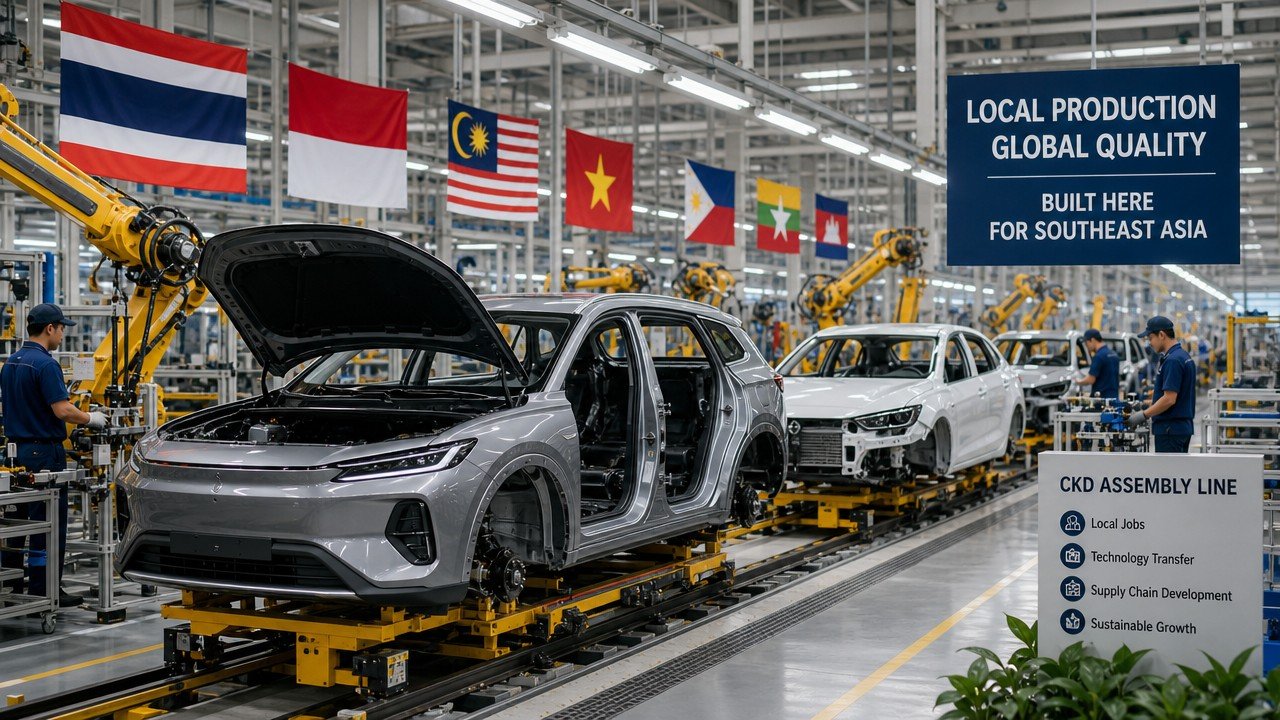
For years, Chinese automakers grew their overseas business by shipping finished vehicles. Now a second wave is building: brands from BYD and Chery to XPENG and GWM are setting up local CKD (completely knocked down) assembly operations across Southeast Asia, Africa and Latin America. The shift is changing how cars are imported, priced and sold in dozens of markets - and creating both challenges and opportunities for international buyers.
Southeast Asia Leads the Wave
Malaysia has become the region's hottest CKD hub. From XPENG to Leapmotor, BYD to GWM, and SAIC to Chery, Chinese brands are using CKD assembly to redefine their presence in the Malaysian market, according to industry reports in August 2026. BYD's CKD plant in Tanjong Malim is set to begin local production, with locally assembled models priced from around RM 100,000. In Thailand, BYD's factory has been producing up to 150,000 electric vehicles a year since it opened, anchoring a wider Chinese EV manufacturing cluster in the country. Local assembly lets brands bypass import duties, respond faster to demand and qualify for government incentives - a formula now being repeated across the region.
Africa and Latin America Follow
The same playbook is moving west. Chery is exploring a vehicle assembly plant in South Africa, conducting feasibility studies for local production, while several Chinese brands already run or plan CKD operations in North Africa, including Algeria. In Latin America, assembly projects in Brazil and Mexico are advancing, driven by tariff pressure and local-content requirements. Governments across these regions increasingly favour brands that create local jobs, making CKD presence a competitive advantage that goes far beyond price.
What the CKD Wave Means for Importers
For importers and dealers, the rise of local assembly changes the game in three ways. First, competition: locally assembled models often arrive with lower import costs, pressing prices on parallel-imported finished cars - but full-import vehicles still win where CKD lines have not yet started or where buyers want specific configurations. Second, opportunity: dealers can partner with CKD brands as distributors of locally built cars, or supply semi-knocked-down kits and components to assembly partners. Third, strategy: markets with active CKD programmes tend to tighten finished-vehicle import rules over time, so early positioning matters - choosing which markets to serve with full imports now, and which to serve through local assembly partners later.
Key Takeaways
- Chinese brands are rapidly shifting from finished-car exports to local CKD assembly worldwide.
- Southeast Asia leads, with Malaysia and Thailand hosting major Chinese assembly operations.
- Africa and Latin America are following, driven by tariffs and local-content rules.
- Locally assembled cars press prices, but full imports still win in niches and pre-launch phases.
- Importers can profit as CKD distributors, component suppliers or early market movers.
Adapting to the CKD era? JINGSUN exports new and used vehicles worldwide and works with partners across assembly and distribution - contact us to plan your market strategy.