

China's NEV Export Boom Reshapes Global Trade Dynamics
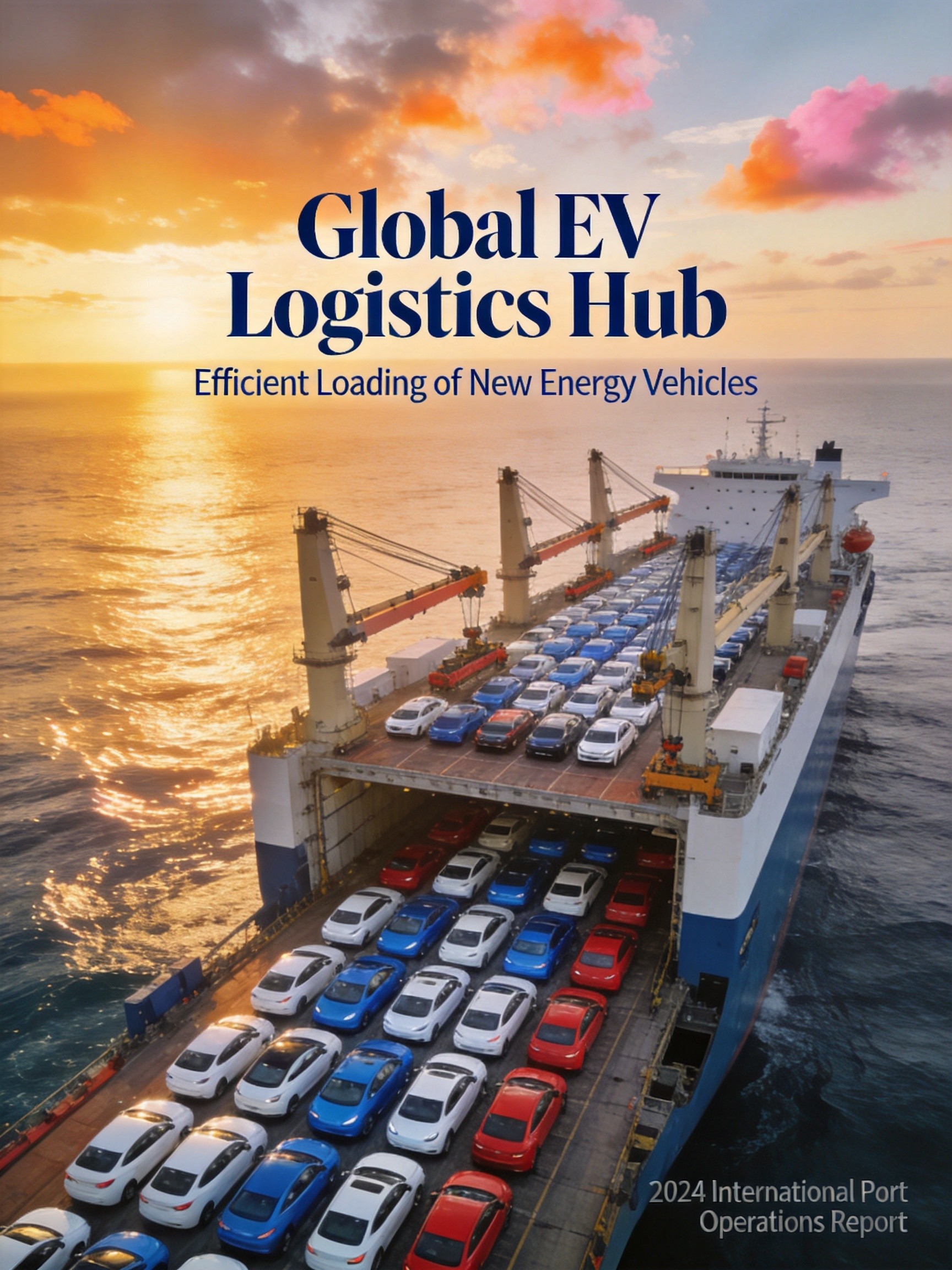
The global automotive industry is experiencing a significant structural shift as China's new energy vehicle (NEV) export capabilities accelerate at unprecedented rates. According to data released by Guangzhou Huangpu Border Inspection Station, Guangzhou Xinsha Port achieved a remarkable milestone in the first half of 2026, with NEV exports reaching 53,126 units—a year-over-year increase of 325% that has already surpassed the port's total NEV export volume for all of 2025. This performance marks a historic first-half record and underscores the dramatic competitive advantage Chinese NEV manufacturers have developed in international markets.
Perhaps more significantly, February 2026 marked the first month in which the port's vehicle export volume exceeded its import volume. For the first six months of the year, total vehicle exports reached over 96,000 units, surpassing imports by nearly 7,000 vehicles and establishing what appears to be a permanent shift toward a "net export" operational model. Xinsha Port, historically known as South China's largest automobile import hub, has fundamentally transformed its market position within just a few years.
Industry Implications of the Regulatory Environment
This export momentum is occurring against a backdrop of evolving regulatory frameworks both domestically and internationally. In a notable development, China's Ministry of Industry and Information Technology (MIIT) publicly refuted rumors suggesting that a mandatory 70% self-sufficiency rate for autonomous driving chips in new vehicles would take effect on July 1, 2026. The ministry confirmed through its official social media channels that no such regulation has been issued, and that no requirements regarding NEV chip technology self-sufficiency rates have been established.
The clarification reflects Beijing's broader approach to semiconductor independence, which prioritizes encouragement and guidance over mandatory quotas. Industry analysts interpret this stance as enabling automakers to develop flexible supply chain strategies aligned with their individual research and development capabilities, rather than imposing uniform compliance requirements that could constrain innovation.
Meanwhile, the domestic regulatory landscape continues to tighten in other critical areas. A mandatory national standard for intelligent connected vehicle combination driving assistance systems (GB 47955-2026) received formal approval on July 2, 2026, with implementation scheduled for January 1, 2027. The standard establishes comprehensive safety requirements for navigation-based combined driving assistance, basic single-lane, and basic multi-lane systems, along with corresponding testing methodologies. The MIIT has emphasized that combination driving assistance systems fall under Level 2 driving automation, requiring drivers to maintain continuous observation of traffic conditions and vehicle control.
European Market Developments and Regulatory Proposals
Across the Atlantic, European regulators are pursuing an aggressive safety agenda that could fundamentally alter the relationship between drivers and their vehicles. Reports indicate that the European Commission is actively investigating technology that would automatically apply vehicle brakes when drivers exceed speed limits, potentially beginning in 2030 for new vehicle registrations. The proposed system would utilize traffic sign recognition combined with GPS data to determine applicable speed limits and intervene physically rather than merely providing audible or visual warnings.
Current European regulations already mandate Intelligent Speed Assistance systems in new vehicles, but these systems only issue warnings and can be easily disabled by drivers. The proposed automatic braking functionality would represent a substantial escalation in regulatory intervention, forcing vehicle manufacturers to implement controls that are considerably more difficult to override. Industry stakeholders have raised significant concerns about technical feasibility, given Europe's diverse road conditions, inconsistent signage, and potential mapping errors that could trigger inappropriate braking interventions.
Discussions remain at an exploratory stage, with the Commission engaging in preliminary consultations with automotive manufacturers and evaluating technical viability. No final decisions have been announced, and the timeline of 2030 suggests substantial development and testing phases remain ahead.
European EV Adoption Continues Positive Trajectory
Despite regulatory uncertainty, European electric vehicle adoption shows continued momentum. Data from the United Kingdom's Society of Motor Manufacturers and Traders (SMMT) reveals that pure electric vehicle sales captured 30% of new vehicle registrations in June 2026, establishing a new historical record for the month. Total new vehicle registrations reached 213,166 units, representing an 11.4% year-over-year increase and the strongest June performance since 2019.
For the first half of 2026, pure EV market share in the UK stands at 25%, against a government-designated annual target of 33%. Industry projections indicate that achieving this target will require EV registrations to exceed 40% for the remainder of the year, a challenging but potentially achievable objective given current growth trajectories. The dual pressures of stringent emissions regulations and volatile fuel prices continue to accelerate consumer migration toward electric mobility options.
For Chinese NEV manufacturers eyeing European market expansion, this regulatory and market environment presents both opportunities and challenges. The UK's strong EV uptake demonstrates European consumer receptivity to electric mobility, while the overall European commitment to electrification creates entry points for internationally competitive Chinese brands. However, manufacturers must navigate increasingly complex compliance requirements that vary across member states.
Strategic Corporate Developments
Major Chinese automakers continue expanding their operational scope in response to evolving industry dynamics. Chery Automobile recently established Anqing Zhongda Auto Parts Co., Ltd., a new subsidiary with registered capital of 50 million yuan. The company's business scope encompasses automotive components and parts manufacturing, research and development activities, wholesale distribution, and notably, smart robot development. The subsidiary is jointly owned by Chery Automobile and its wholly-owned subsidiary Wuhu Puri Automotive Investment Co., Ltd.
This strategic move signals Chery's intention to extend beyond traditional vehicle manufacturing into broader intelligent manufacturing applications. Industry observers interpret the incorporation of smart robot development as aligned with broader industry trends toward automation and intelligent manufacturing, potentially supporting both automotive production processes and future mobility service ecosystems.
Policy Updates and Tax Incentive Modifications
On the domestic policy front, China's Ministry of Finance, State Taxation Administration, and MIIT jointly issued adjustments to vehicle and vessel tax incentive programs, effective January 1, 2027. The announcement confirms the cancellation of two existing preferential policies: the 50% reduction in vehicle and vessel tax for energy-efficient vehicles, and the exemption from vehicle and vessel tax for pure electric commercial vehicles, plug-in hybrid commercial vehicles, and fuel cell commercial vehicles. It's important to note that pure electric passenger vehicles and fuel cell passenger vehicles fall outside the vehicle and vessel tax scope entirely and were not subject to these incentive programs.
Additionally, Hainan Province has published its "Fifteenth Five-Year Plan for Hainan National Ecological Civilization Demonstration Zone," explicitly outlining a gradual approach to banning fuel vehicle sales by 2030. The provincial plan specifies that by 2030, 100% of newly added or replaced vehicles in public services and social operations (with limited exceptions for special purposes) should utilize clean energy, and 100% of newly purchased private vehicles should be new energy vehicles. The province also aims to maintain a vehicle-to-charger ratio below 2.5:1.
Market Outlook for International Buyers
For B2B participants in the international automotive trade—including importers, distributors, and fleet operators—the convergence of these developments suggests several strategic considerations. China's emergence as a dominant NEV exporter, demonstrated by the Xinsha Port performance, indicates that international buyers will have access to increasingly competitive Chinese electric vehicle offerings. The country's manufacturing scale and rapidly maturing supply chain position Chinese brands to offer compelling value propositions in price-sensitive markets.
However, the evolving regulatory environment demands careful attention. International traders must monitor compliance requirements across multiple jurisdictions, understanding that safety standards, autonomous driving regulations, and tax incentive structures vary significantly between markets. Chinese domestic regulations are tightening particularly in areas of battery safety, software security, and driving assistance systems, potentially raising the baseline quality of exported vehicles while also increasing manufacturer compliance costs.
The European market presents particular complexity given the proposed automatic braking requirements and existing type approval procedures. Manufacturers serving European customers should anticipate increasingly stringent safety technology mandates and prepare accordingly for potential technology integration requirements.
Overall, the global automotive landscape in 2026 demonstrates a clear trajectory toward electrification, intelligentization, and increasingly harmonized regulatory oversight. Market participants who successfully navigate these intersecting trends—leveraging China's export capabilities while maintaining compliance with diverse regional requirements—will be well-positioned to capture growth opportunities in the evolving mobility sector.