China's L2 Autonomous Driving Mandate: What International Buyers Need to Know
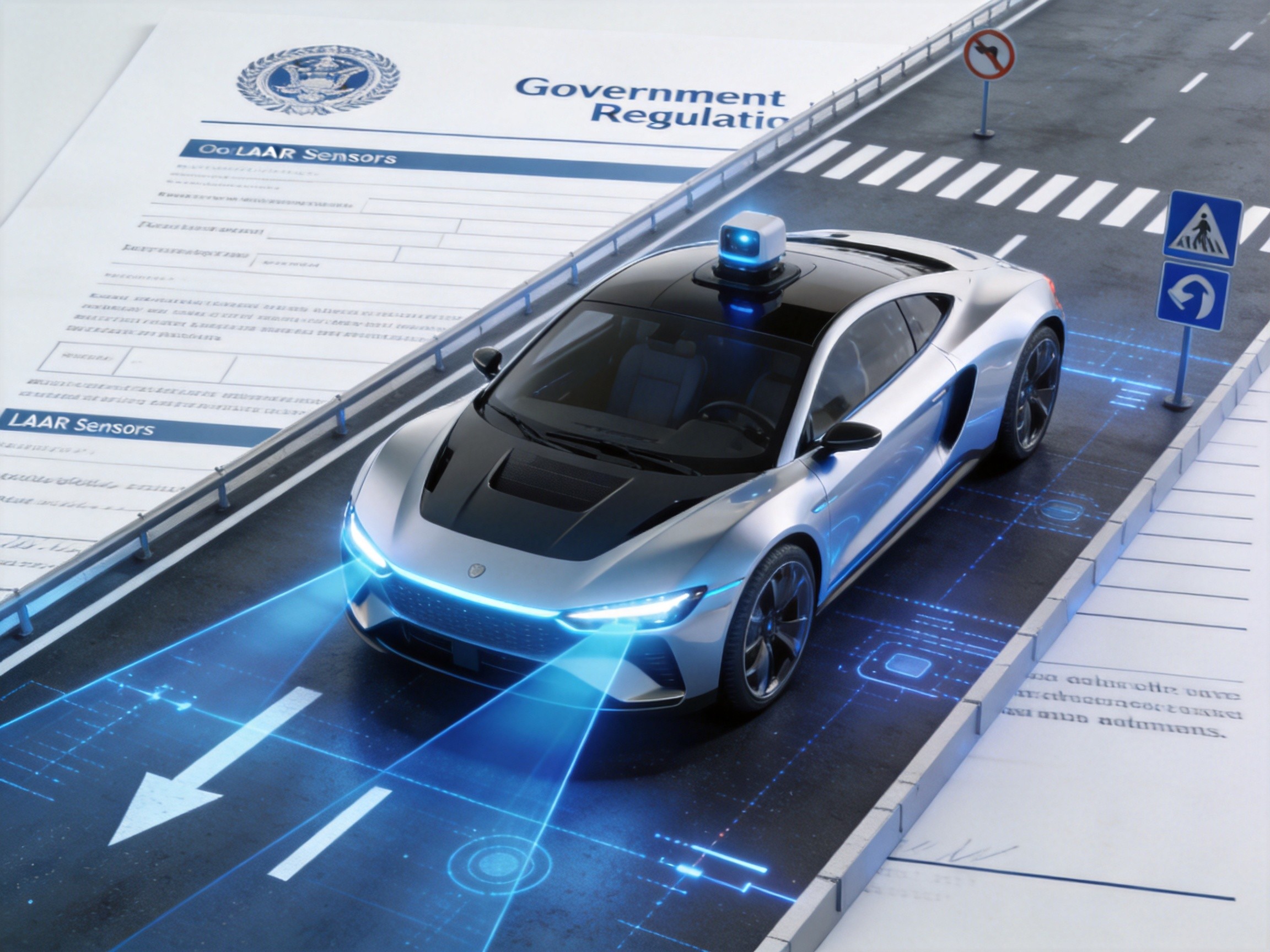
China has officially entered a new era of intelligent vehicle regulation. On January 1, 2027, the nation's first mandatory national standard for L2 combination driving assistance systems (GB 47955-2026) will take effect, fundamentally altering the landscape for automakers, suppliers, and international traders operating in or exporting to the world's largest automotive market.
The regulation arrives at a pivotal moment: approximately 70% of new vehicles sold in China now come equipped with L2 smart driving capabilities. This rapid proliferation has brought undeniable safety benefits but also exposed significant governance gaps. Previous standards were largely recommendatory in nature, lacking the enforcement mechanisms necessary to ensure consistent safety practices across the industry.
Understanding the Mandatory Framework: GB 47955-2026
The newly published standard represents a comprehensive approach to governing L2 autonomous driving technology. Unlike its recommendatory predecessors, GB 47955-2026 establishes binding requirements that will reshape how intelligent driving systems are designed, tested, and deployed across China's automotive sector.
Defining Responsibility: The Driver Remains Paramount
Perhaps the most consequential aspect of the new regulation is its explicit definition of L2 driving assistance. The standard definitively categorizes these systems as "driver assistance" rather than autonomous driving, establishing the human operator as the permanent and indisputable leader in the vehicle control hierarchy.
Under this framework, drivers activating L2 systems retain full legal responsibility for vehicle operation. Prior to first-time use of intelligent driving features, drivers must complete mandatory safety training—a provision designed to cultivate appropriate expectations around human-machine collaboration and prevent overreliance on automated systems.
Driver Monitoring: Eliminating "Cheat Codes"
The regulation introduces rigorous driver engagement monitoring requirements that will fundamentally alter the driving experience for many users. At speeds exceeding 10 km/h, vehicles must continuously assess both hand positioning on the steering wheel and visual attention to the road ahead.
The monitoring protocol operates through graduated escalation. When drivers remove their hands from the steering wheel for five seconds, the system issues an initial alert. Failure to correct this behavior triggers high-intensity audiovisual warnings. Similarly, drivers who direct their gaze away from the road for five consecutive seconds will receive alerts. Attempts to circumvent monitoring through camera obstruction result in immediate disabling of advanced functions such as automatic lane changing.
Persistent non-compliance carries significant consequences. After multiple ignored warnings, the intelligent driving system enters a mandatory "lockout" period lasting at least 30 minutes before the driver can reactivate the features—a deterrent designed to enforce meaningful driver engagement throughout the journey.
Performance Thresholds: Establishing Minimum Safety Baselines
Beyond monitoring requirements, the standard establishes clear performance categories for L2 systems. Manufacturers must classify their offerings into one of three tiers: basic single-lane operation, basic multi-lane operation, or Navigate on Autopilot (NOA). Each category carries specific capability requirements.
For instance, at speeds of 80 km/h, systems must detect stationary obstacles at least 120 meters ahead and execute controlled emergency braking. This requirement ensures that even baseline L2 systems deliver meaningful collision avoidance capability, establishing a genuine safety floor rather than permitting systems that function only under optimal conditions.
Certification Requirements: The Compliance Gauntlet
Meeting these standards demands substantial testing rigor. Manufacturers must validate their systems through 46 extreme scenario tests conducted in controlled environments—encompassing rare but potentially catastrophic situations such as sudden obstacle appearance, adverse weather conditions, and sensor degradation. Additionally, systems must accumulate at least 72 hours of effective real-world road testing across diverse conditions.
Perhaps most significantly, all vehicles must now incorporate tamper-resistant event data recording systems—essentially automotive "black boxes"—that document system behavior and driver engagement metrics. This requirement serves dual purposes: enabling accident investigation and establishing accountability records for regulatory review.
Industry analysts estimate these requirements will increase per-vehicle material costs by several hundred yuan. For manufacturers offering L2 features as optional upgrades on entry-level models, this cost pressure may prompt difficult decisions about feature availability and pricing strategy.
Strategic Implications for the Automotive Supply Chain
The standard's requirements will accelerate structural transformation across China's automotive industry. Manufacturers previously relying on external supplier "black box" solutions face substantially elevated barriers to market entry. The complexity of integrating monitoring systems, data recording, and comprehensive testing protocols favors companies with full-stack development capabilities.
Industry resources are expected to consolidate toward leading manufacturers with established research and development infrastructure. This concentration may reshape competitive dynamics, potentially reducing the number of players offering advanced intelligent driving features while elevating overall system quality among remaining participants.
The monitoring equipment supply chain—particularly providers of infrared cameras, driver monitoring systems (DMS), and associated processing units—stands to benefit from mandatory inclusion requirements that previously represented optional upgrades.
International Trade Considerations
For international buyers and exporters, the new standard carries several strategic implications. China's mandatory requirements align closely with international frameworks, particularly United Nations regulation UN R171, facilitating potential market access for Chinese manufacturers prepared for domestic compliance.
The enhanced testing rigor provides Chinese automakers with rigorous preparation for international regulatory environments. Vehicles validated under China's demanding domestic standards may find smoother certification pathways in European, Middle Eastern, and other markets with established intelligent vehicle regulations.
The broader regulatory context reinforces this trend. Eight-two national automotive standards took effect in July 2026, including comprehensive requirements covering battery safety, collision protection, over-the-air software updates, and vehicle information security. This comprehensive regulatory architecture positions China as an increasingly influential standard-setter in global automotive governance.
For traders sourcing vehicles from China, certification status should become a critical evaluation criterion. Suppliers demonstrating early compliance verification—as demonstrated by manufacturers like CATL and BYD—may offer reduced risk profiles for import markets anticipating similar regulatory evolution.
Looking Ahead: The Regulatory Trajectory
The introduction of GB 47955-2026 represents a milestone in automotive governance, but certainly not an endpoint. Regulatory authorities have signaled continued evolution, with additional requirements for intelligent connected vehicles scheduled for implementation beyond 2027.
The broader pattern reveals expansion from traditional passive safety toward comprehensive "big safety" frameworks encompassing functional safety, information security, and data protection. For international traders, this trajectory suggests that compliance capability will increasingly differentiate suppliers and that early engagement with regulatory developments offers competitive advantage.
China's automotive industry entered 2026 with revenue of 4.21 trillion yuan and profit of 144 billion yuan through May—a profit margin of 3.4% reflecting intense competitive pressure alongside significant investment requirements. The new regulatory environment will likely intensify short-term cost challenges while establishing foundations for sustainable long-term development through enhanced product quality and market confidence.
Conclusion
The implementation of China's mandatory L2 autonomous driving standard marks a watershed moment for the global automotive industry. As the world's largest vehicle market establishes comprehensive requirements for intelligent driving systems, participants across the value chain must adapt strategies accordingly.
For international buyers and traders, understanding these regulations offers critical insight into product availability, quality trajectories, and competitive positioning. Suppliers demonstrating early compliance certification may provide particular value for markets anticipating their own regulatory evolution.
The fundamental objective remains clear: ensuring that technological advancement serves safety rather than undermining it. China's mandatory L2 standard, with its emphasis on driver accountability, system capability thresholds, and rigorous validation requirements, establishes a template that other markets may increasingly reference. For those engaged in international automotive trade, staying informed about these developments is not merely advantageous—it is essential for sustainable business success in an increasingly regulated global marketplace.