

Introduction: A Historic Milestone in Global Auto Trade
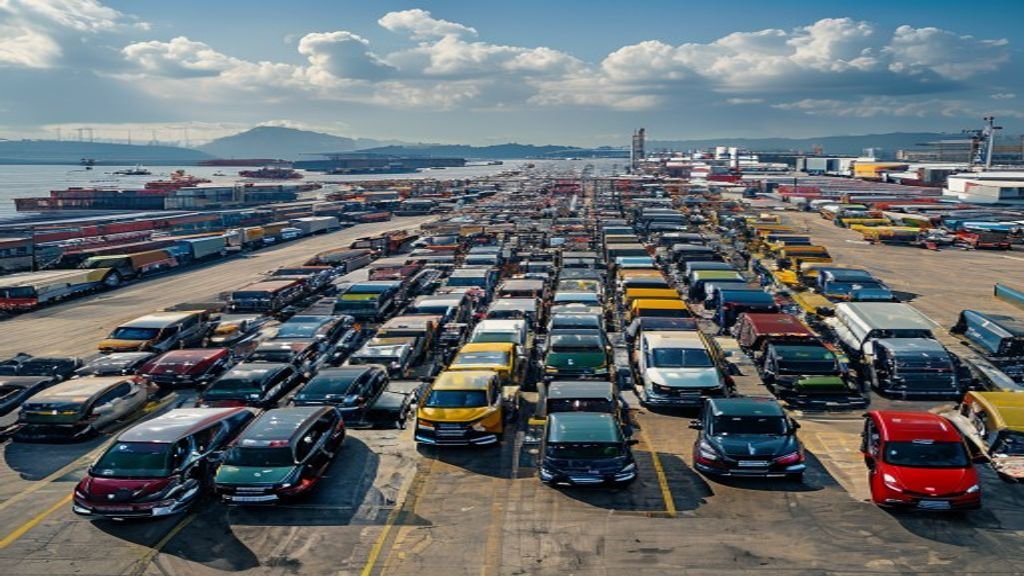
In June 2026, China's automotive export sector achieved an unprecedented milestone, fundamentally reshaping the landscape of global vehicle trade. According to data released by the China Association of Automobile Manufacturers (CAAM), the country exported 1.037 million vehicles in a single month for the first time in history. This remarkable figure represents an 11.6% month-over-month increase and a staggering 75.1% year-over-year surge. For international car buyers, traders, and dealers across Africa, the Middle East, Southeast Asia, and South America, this data signals a massive shift in supply availability and market dynamics.
As we analyze the first half of 2026, it becomes clear that the era of relying solely on domestic consumption is over. Chinese automakers are aggressively pivoting toward overseas expansion, driven by both robust international demand and structural shifts within the domestic market. This article breaks down the critical H1 2026 data, explores the evolving supply chain, and provides strategic insights for B2B automotive importers navigating this new reality.
H1 2026 Export Data: Unpacking the Numbers
The cumulative export data for the first six months of 2026 underscores the relentless momentum of China's auto trade. Total vehicle exports reached 5.096 million units, marking a 65.3% year-over-year increase. To put this into perspective, prior to 2021, China's annual vehicle exports averaged around one million units. Today, the industry is already close to 69% of the CAAM's projected full-year target of 7.4 million units, suggesting that total 2026 exports could significantly exceed initial expectations.
The Dual-Track Boom: NEVs and ICE Vehicles
While New Energy Vehicles (NEVs) dominate the headlines, the export boom is distinctly dual-track, offering diverse sourcing options for global importers.
- NEV Exports: In June 2026, NEV exports reached 523,000 units, soaring 160% year-over-year. For the first half of the year, NEV exports totaled 2.355 million units, up 120% year-over-year, accounting for 46.2% of total vehicle exports.
- ICE Vehicle Exports: Traditional internal combustion engine (ICE) vehicles remain highly relevant for many international markets. June ICE exports hit 514,000 units, up 32.7% year-over-year. H1 ICE exports reached 2.741 million units, reflecting a steady 35.5% year-over-year growth.
This balanced growth indicates that while electrification is accelerating, the global demand for reliable, cost-effective ICE vehicles—particularly for use as used car exports in developing regions—remains exceptionally strong.
Domestic Market Pressures Driving Global Expansion
The explosive growth in exports is partly a strategic response to a cooling domestic market. In the first half of 2026, domestic passenger vehicle retail sales totaled 8.7 million units, down 20.2% year-on-year, according to the China Passenger Car Association (CPCA). Traditional gasoline vehicle domestic sales slumped by 27.8% year-over-year to 4.83 million units.
Furthermore, the industry's average profit margin has reportedly fallen to a 3.4% warning line. Facing shrinking domestic volumes and intense price competition, automakers are redirecting their focus to overseas channels. Leading groups like SAIC Motor, BYD, Geely, and Chery are leveraging their global supply chains to secure market share in regions like ASEAN, the Middle East, and Russia. For B2B buyers, this means Chinese manufacturers are more willing than ever to offer competitive pricing, flexible financing, and dedicated export logistics to secure international orders.
Supply Chain Evolution in the EV Era
For global traders and importers, understanding the underlying shifts in the automotive supply chain is crucial for long-term procurement strategies. The transition to electric vehicles is redefining manufacturing and aftermarket dynamics from the ground up.
In the EV era, the traditional supply chain is being streamlined. Electric powertrains require significantly fewer moving parts compared to internal combustion engines. Consequently, the manufacturing focus has shifted heavily toward battery packs, electric motors, and digital control units. The battery pack alone accounts for 30% to 40% of total manufacturing costs. This structural change means that procurement strategies are now heavily reliant on securing lithium, cobalt, nickel, and specialized semiconductors.
For the used car export market, this evolution presents new considerations. With fewer mechanical components requiring frequent maintenance, the lifecycle maintenance costs for EVs are projected to be lower. However, importers must also navigate the complexities of battery health assessments and the availability of specialized electronic replacement parts in their target markets.
Strategic Implications for Global B2B Importers
What do these record-breaking H1 2026 figures mean for international auto traders and dealers? The data points to several actionable strategic shifts:
- Diversified Sourcing Portfolios: Importers should maintain a balanced portfolio. While NEVs offer cutting-edge technology and appeal to urban markets in Southeast Asia and the Middle East, ICE vehicles continue to provide robust, high-volume sales opportunities in African and South American markets where charging infrastructure is still developing.
- Securing Logistics and Shipping: With monthly exports exceeding 1 million units, competition for ro-ro vessel space and container slots is fierce. B2B buyers must establish long-term partnerships with freight forwarders and export agencies to ensure timely delivery and avoid supply chain bottlenecks.
- Capitalizing on OEM Overseas Ambitions: As Chinese automakers face domestic margin pressures, they are highly motivated to build overseas brand loyalty. Dealers and importers can leverage this by negotiating better terms, localized marketing support, and enhanced after-sales training from the manufacturers.
Outlook for the Second Half of 2026
Industry experts, including CAAM and CPCA leadership, maintain an optimistic outlook for the second half of 2026. Continued implementation of consumer incentive policies, the rollout of new vehicle models, and more stable market pricing are expected to support auto consumption. However, the structural shift toward overseas expansion is irreversible.
For the global automotive trade community, the message is clear: China's automotive industry is no longer just a domestic manufacturing powerhouse; it is a global export engine. By understanding the data, adapting to supply chain evolutions, and securing reliable logistics, international B2B buyers can position themselves to capitalize on this historic surge in vehicle availability.