

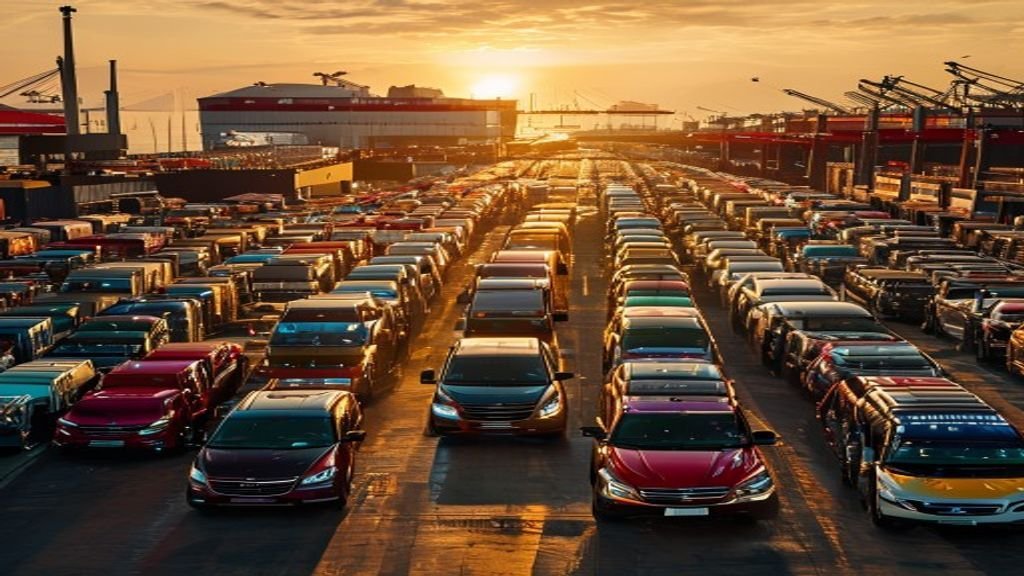
Introduction: A New Era for Global Auto Sourcing
The global automotive trade landscape is undergoing a rapid transformation, driven by unprecedented production milestones, aggressive overseas expansion strategies, and the continuous cost-reduction of new energy vehicles (NEVs). For international car buyers, traders, and importers across Africa, the Middle East, Southeast Asia, and South America, these shifts present highly lucrative sourcing opportunities. Recent industry developments highlight how Chinese automakers are not only scaling up production but also deeply integrating into global markets, offering high-value, technologically advanced vehicles at highly competitive price points.
GAC Group's 30-Million Milestone and Strategic Global Expansion
In a landmark achievement for the Chinese automotive industry, GAC Group announced that its 30-millionth vehicle has officially rolled off the production line and been delivered. Reaching this milestone in just 29 years underscores the rapid maturation and manufacturing scale of China's auto sector.
More importantly for global B2B buyers, GAC has outlined an aggressive internationalization strategy for the next decade. The company plans to enter 120 countries and regions by 2030, establishing over 2,000 overseas outlets and achieving an annual overseas sales volume of 1 million units.
- Dealer Confidence: The commitment to building 2,000 overseas networks signals to local importers and dealers that GAC is investing heavily in long-term after-sales support, spare parts availability, and localized service infrastructure.
- Supply Chain Reliability: Hitting the 30-million mark proves robust manufacturing capacity, ensuring that international traders can rely on stable vehicle supply volumes without prolonged production bottlenecks.
Ultra-Competitive NEVs: High-Margin Sourcing for Emerging Markets
One of the most significant trends for auto exporters is the relentless downward pricing of premium NEV technologies. Recent model launches demonstrate that importers can now source vehicles with cutting-edge specs at entry-level price brackets, maximizing profit margins in cost-sensitive markets.
Leapmotor's 800V Disruption
Leapmotor has launched its new B-series, featuring the B10 (a compact SUV) starting at just 99,800 RMB (approximately $13,800 USD) and the B01 (a compact sedan) starting at 95,800 RMB. Despite the aggressive pricing, these models come fully equipped with the Qualcomm Snapdragon SA8295P chip, a global 800V Silicon Carbide (SiC) high-voltage architecture, and 3C fast charging capabilities. For importers in Southeast Asia and Latin America, offering 800V fast-charging technology at this price point provides a massive competitive advantage over legacy internal combustion engine (ICE) and older EV models.
Value-Driven Alternatives
Similarly, SAIC-GM-Wuling launched the Starlight L, a plug-in hybrid large six-seat SUV, starting at an effective price of 109,800 RMB, featuring a customized Android 13-based smart OS. Meanwhile, XPeng introduced the MONA L03 starting at 123,800 RMB. These launches confirm that the Chinese supply chain has successfully commoditized advanced EV and PHEV technologies, allowing global traders to source high-tech vehicles that appeal to the growing middle class in emerging economies.
Battery Supply Chain Resilience and Intelligent Driving at Scale
For B2B buyers, supply chain stability and technological iteration are paramount. Recent data from the China Automotive Battery Innovation Alliance reveals that domestic power battery installations in June reached 76.5 GWh, a significant 31.5% year-on-year increase. In the first half of 2026, cumulative installations hit 335.6 GWh, up 12.0% year-on-year. This surge indicates that upstream material costs are stabilizing, and battery production is scaling efficiently, which directly translates to more predictable export pricing for NEVs.
Furthermore, intelligent driving is transitioning from a premium differentiator to a mass-market standard. BYD announced that its fleet of vehicles equipped with advanced driver-assistance systems (ADAS) has surpassed 3.33 million units, with 176,300 ADAS-equipped cars sold in June alone. The system generates over 210 million kilometers of driving data daily. For exporters, this massive data lake ensures continuous algorithm optimization and over-the-air (OTA) improvements, meaning the smart features of exported vehicles will continue to enhance in value and performance long after the initial sale.
Localization Strategies and Evolving Global Regulations
To navigate shifting global trade policies and tariffs, Chinese automakers are accelerating localized production and strategic partnerships overseas.
- European Manufacturing Footprint: Volvo Cars has secured up to €119 million in subsidies from the Belgian government to enhance the competitiveness of its Ghent plant, which produces the EX30 and may soon assemble other Geely group brands like Lynk & Co. Concurrently, XPeng's CEO indicated the company is considering producing vehicles in Germany. These moves highlight a strategic shift from pure cross-border export to localized manufacturing, which traders must factor into their long-term regional sourcing strategies.
- Regulatory Shifts in Autonomous Vehicles: In the United States, the NHTSA has updated Federal Motor Vehicle Safety Standard (FMVSS) No. 135, dropping the manual brake pedal mandate for vehicles designed exclusively for autonomous operation. While currently specific to purpose-built robotaxis, this regulatory evolution signals a global trend toward software-defined vehicle architectures, paving the way for future exports of advanced autonomous commercial and passenger shuttles.
Conclusion: Strategic Sourcing for the Future
The latest developments in the Chinese automotive sector offer a clear roadmap for global auto importers and dealers. With GAC's massive overseas network expansion, the ultra-competitive pricing of 800V-equipped NEVs from brands like Leapmotor, and the sheer scale of battery and ADAS production, the sourcing opportunities are vast. Traders who align their procurement strategies with these high-value, technologically advanced, and well-supported vehicle lines will be best positioned to capture market share in the world's fastest-growing automotive regions.