

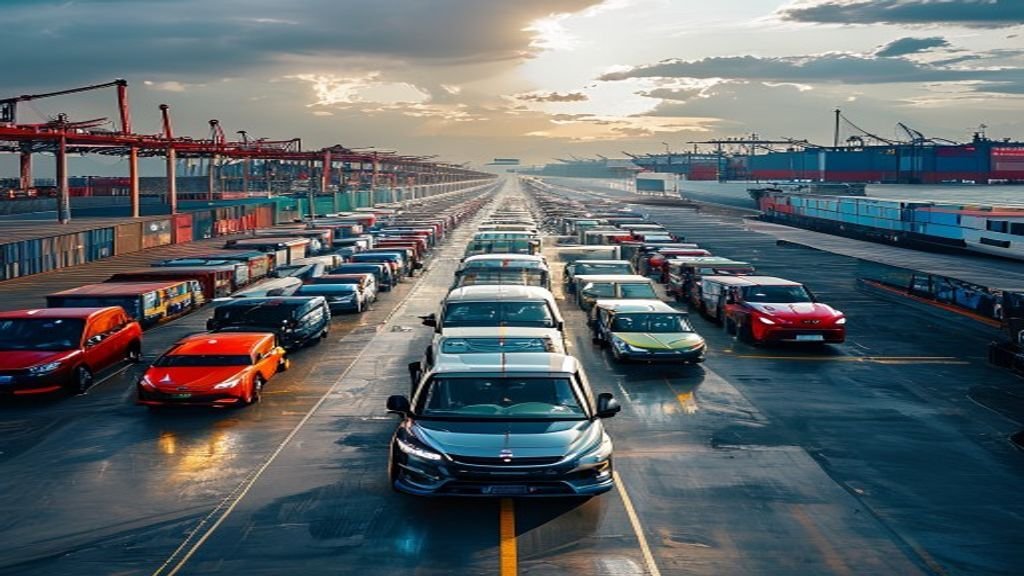
The H1 2026 Milestone: Export Volumes Shatter Records
The first half of 2026 has marked a historic turning point for the global automotive trade landscape. According to data released by the China Association of Automobile Manufacturers (CAAM), China's auto exports reached a staggering 1.037 million units in June 2026, marking the first time in history that monthly exports surpassed the one-million-unit threshold. This represents a monumental 75.1% year-on-year surge and an 11.6% month-on-month increase.
For the first half of the year, total auto exports reached 5.096 million units, reflecting a robust 65.3% year-on-year growth. This explosive export performance has effectively offset a challenging domestic market, where H1 sales totaled 15.02 million units, a 4.1% decline year-on-year. For international buyers, traders, and importers, this data underscores a critical reality: Chinese manufacturing capacity is increasingly pivoting toward global markets, creating unprecedented sourcing opportunities.
The Great Divergence: Domestic EVs vs. Overseas PHEV Demand
One of the most significant trends shaping the export market is the stark divergence in powertrain preferences between domestic and international buyers. While the domestic market continues to favor Battery Electric Vehicles (BEVs), overseas markets are showing an insatiable appetite for Plug-in Hybrid Electric Vehicles (PHEVs).
Data from the China Passenger Car Association (CPCA) highlights this structural shift. In the domestic market during H1 2026, BEV sales reached 4.987 million units (up 13% year-on-year), while PHEV sales dipped to 2.457 million units (down 2.5%). Conversely, the export narrative is entirely different:
- June BEV Exports: 309,000 units (up 1.4 times year-on-year).
- June PHEV Exports: 214,000 units (up 1.9 times year-on-year).
- H1 BEV Exports: 1.433 million units (up 1.1 times year-on-year).
- H1 PHEV Exports: 922,000 units (up 1.4 times year-on-year).
For B2B traders targeting regions with developing charging infrastructure—such as parts of Africa, the Middle East, Latin America, and Southeast Asia—PHEVs offer the perfect bridge. They provide the electric driving experience for urban commutes while eliminating range anxiety for long-distance travel. Sourcing agents are currently reporting massive overseas demand for Chinese PHEVs, with individual consumers and dealers actively seeking direct purchase channels.
H2 2026 Outlook: Structural Shifts and the 10 Million Unit Trajectory
As we move into the second half of 2026, industry analysts anticipate a continuation of this export-led growth, albeit with structural refinements. According to strategic forecasts from Gast Auto, the total annual auto trade export is projected to break through the 10.2 million unit mark, maintaining a year-on-year growth rate of over 40%.
However, the composition of these exports will shift. Gast predicts that New Energy Vehicle (NEV) exports will surpass internal combustion engine (ICE) vehicles, accounting for more than 50% of total export volumes in the second half of the year. This is driven by the continuous improvement of charging infrastructure in emerging markets and favorable tax policies in regions like Southeast Asia and Europe.
Meanwhile, traditional fuel vehicle exports face headwinds. Adjustments in tax policies and localization scoring rules in key markets such as Russia and Europe are expected to constrain ICE export volumes. Consequently, the export growth model is transitioning from broad-based expansion to a highly structured growth phase, heavily reliant on NEVs and emerging market demand.
Global Restructuring: What It Means for International Sourcing
While China's export engine runs hot, the broader global automotive industry is grappling with intense cost pressures and restructuring. Morningstar's H2 2026 Global Automotive Outlook notes that global light vehicle sales remain down more than 4% year-to-date through May 2026. Original Equipment Manufacturers (OEMs) worldwide are accelerating restructuring initiatives, focusing on cost reduction, production localization, and capacity rationalization.
European and Japanese OEMs, in particular, face significant earnings pressure and competitive challenges. Credit rating trends in the sector remain predominantly negative. For global auto importers, this macroeconomic environment presents both risks and opportunities. On one hand, the aggressive pricing strategies and rapid iteration of Chinese brands are forcing legacy automakers to adapt, potentially leading to more competitive pricing in the used and new car segments. On the other hand, geopolitical uncertainties and uneven regional demand require traders to diversify their sourcing portfolios and remain agile in navigating shifting tariff landscapes.
Strategic Sourcing Playbook for Global Auto Traders
To capitalize on these H2 2026 trends, international buyers and trading companies should consider the following strategic adjustments:
- Prioritize PHEV Sourcing for Emerging Markets: With PHEV export growth outpacing BEVs, secure supply chains for high-quality Chinese PHEVs. These vehicles are highly attractive in regions where public charging networks are still maturing.
- Capitalize on NEV Dominance: As NEVs are projected to exceed 50% of China's export volume, ensure your inventory and logistics partnerships are optimized for battery-electric and plug-in hybrid vehicles, including specialized Ro-Ro and container shipping arrangements.
- Monitor Tariff and Policy Shifts: With trade environments tightening in regions like Brazil and the EU, stay informed about local import regulations, green certifications, and tariff adjustments to ensure compliance and maintain profit margins.
- Leverage OEM Restructuring: As legacy automakers restructure and optimize their portfolios, secondary markets for used cars and specific new car models may present lucrative arbitrage opportunities for well-connected traders.
The second half of 2026 promises to be a pivotal period for the global automotive trade. By understanding the deep structural shifts in powertrain preferences and global manufacturing dynamics, B2B buyers can position themselves to capture maximum value in this rapidly evolving market.