Introduction
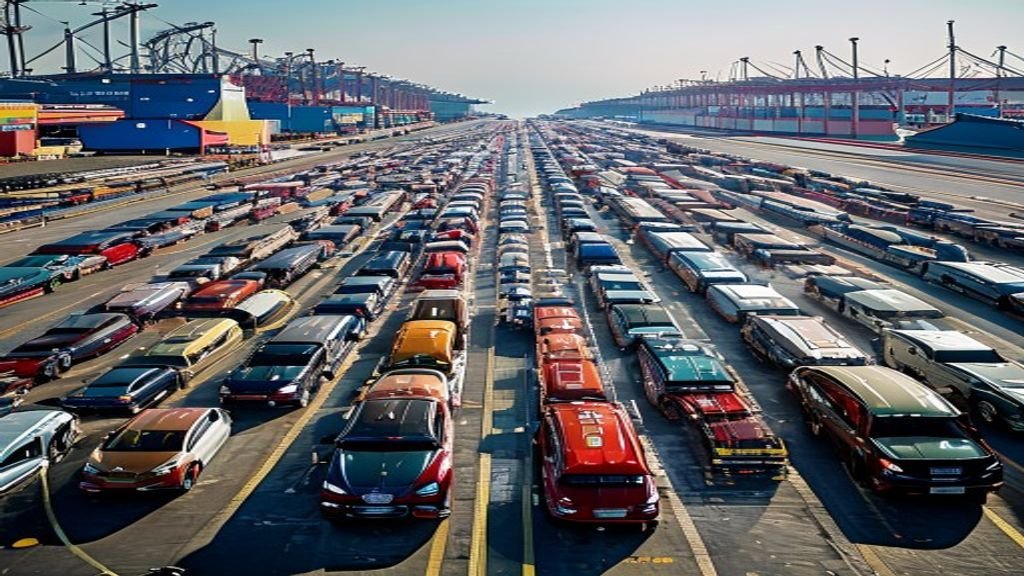
The global automotive trade landscape is undergoing a profound transformation in 2026. As the industry transitions from the initial phase of electrification to a new era defined by intelligent computing, sourcing strategies for international buyers must evolve accordingly. According to data from the China Association of Automobile Manufacturers (CAAM), China's automobile exports reached a staggering 5.096 million units in the first half of 2026, representing a robust year-on-year growth of 65.3%. Notably, new energy vehicle (NEV) exports surged by an impressive 122%, underscoring the accelerating global demand for electrified mobility.
For B2B buyers, importers, and dealers across Africa, the Middle East, Southeast Asia, South America, and beyond, these macroeconomic shifts present both opportunities and complexities. This article analyzes the latest H1 2026 data and industry trends to help global stakeholders optimize their vehicle sourcing strategies in an increasingly competitive and technology-driven market.
H1 2026 Export Milestones and Shifting Global Demand
The sheer volume of Chinese auto exports in H1 2026 highlights the country's entrenched position as a global automotive powerhouse. However, the composition of this growth reveals deeper market dynamics. The domestic market has entered a phase of intense存量 (existing stock) competition, with over 130 brands and more than 500 new models launched in the first half of the year alone. Consequently, overseas markets have become the primary engine for industry expansion.
This export momentum is strongly mirrored by consumer demand in key international markets. In the European Union, for instance, new car registrations grew by 5.7% in H1 2026, driven by a strong June performance. More importantly, battery-electric vehicles (BEVs) captured a 20.7% market share, with 1.22 million units registered—a 40.5% increase compared to the same period last year. Plug-in hybrid electric vehicles (PHEVs) also secured a 9.8% share, while traditional petrol and diesel vehicles saw their combined market share drop to 29.7%.
Chinese brands are capitalizing on this electrification wave. In June 2026, Chinese automakers captured an estimated 34% of Europe’s plug-in hybrid market, led by advanced hybrid systems from brands like BYD and Chery. For global dealers, this data signals a clear directive: portfolios must be heavily weighted toward advanced NEVs and PHEVs to meet shifting consumer preferences and regulatory environments.
The Strategic Pivot: From Battery Capacity to Computing Power
While electrification remains the foundational enabler for Chinese automakers going global, the core competitive battleground has shifted. Industry leaders at the 2026 China Auto Forum emphasized that the industry is moving from competing on battery capacity in the first half to competing on computing power and artificial intelligence in the second half.
Software-defined vehicles are rapidly evolving into AI-defined vehicles. Overseas partners and international buyers are now focusing heavily on Chinese automakers' AI technology layouts, smart cabin ecosystems, and autonomous driving capabilities, rather than just basic product planning. Establishing a generational advantage in AI and smart driving is now seen as the key to defining the next generation of global mobility.
Simultaneously, battery technology continues to advance to support these high-computing platforms. Solid-state batteries are accelerating toward mass production. For example, Changan Automobile has completed technical validation for 20Ah-level sulfide and derivative composite solid-state batteries, achieving a single-cell energy density of 400Wh/kg. Such breakthroughs promise longer ranges, enhanced safety, and better support for energy-intensive AI systems, offering a compelling value proposition for B2B importers looking to differentiate their offerings in local markets.
Navigating Compliance, Quality, and Supply Chain Localization
As Chinese auto exports enter the deep-water zone of globalization, navigating regulatory compliance and supply chain realities is paramount. The going-global model is evolving from single-product exports to localized deep cultivation across the entire industrial chain. Currently, Chinese automakers operate over 20 overseas整车 (complete vehicle) factories, and 82% of the top 100 domestic parts suppliers have established overseas production bases.
However, geopolitical and regulatory headwinds require careful navigation. In the United States, the auto industry is racing to purge Chinese connected-car hardware ahead of federal software restrictions in 2027 and hardware bans in 2030. Importers targeting the North American market must be acutely aware of these compliance timelines and the complexities of the supply chain.
Furthermore, quality control remains a critical focus. Recent scrutiny over defective LFP batteries in high-mileage fleet vehicles highlights the need for rigorous quality assurance. Rapid growth and intense price competition can sometimes strain development cycles. B2B buyers must prioritize sourcing from manufacturers with proven track records in battery reliability and comprehensive after-sales support to protect their brand reputation.
Strategic Sourcing Recommendations for Global B2B Buyers
To capitalize on the current industry trends and mitigate emerging risks, global dealers and importers should consider the following strategic adjustments:
- Diversify Powertrain Portfolios: With BEVs, PHEVs, and HEVs collectively dominating growth in markets like Europe, ensure your inventory reflects a balanced mix of electrified options. PHEVs, in particular, offer a strong bridge for markets with developing charging infrastructure.
- Prioritize AI and Smart Features: When selecting models for import, prioritize vehicles equipped with advanced computing architectures, smart cockpits, and ADAS (Advanced Driver Assistance Systems). These features are becoming the primary differentiators for end consumers.
- Leverage Localized Supply Chains: Work with Chinese partners who are actively building localized manufacturing and supply chain hubs. Sourcing from vehicles produced in regional hubs can help navigate tariffs, reduce shipping times, and ensure better compliance with local trade policies.
- Enforce Strict Quality and Compliance Checks: Implement rigorous pre-shipment inspections, particularly focusing on battery health and software compliance. Ensure that the connected-car hardware in the vehicles you source aligns with the long-term regulatory frameworks of your target destinations.
Conclusion
The first half of 2026 has unequivocally demonstrated that the global automotive trade is no longer just about moving metal across borders; it is about transferring advanced technological ecosystems. The shift from electrification to AI intelligence, coupled with the deep localization of supply chains, requires a more sophisticated approach to B2B sourcing. By staying informed on data-driven market trends, prioritizing intelligent and high-quality vehicles, and adapting to regional compliance landscapes, international buyers can secure a competitive edge in the evolving global automotive market. The journey of globalization is a marathon, and long-term strategic partnerships will be the key to sustained success.