

The 2026 Automotive Export Landscape: A Market in Transition
The global automotive industry has entered a fiercely competitive new phase in 2026. For international car buyers, traders, and dealers across Africa, the Middle East, Southeast Asia, and South America, understanding the macroeconomic shifts in manufacturing hubs is no longer optional—it is essential for maintaining profitability. In the first quarter of 2026 alone, global electric vehicle (EV) sales reached approximately 3.7 million units, reflecting a 12% year-over-year increase. However, beneath these headline-grabbing growth figures lies a complex web of overcapacity, surging material costs, and supply chain realignments that are fundamentally altering international sourcing strategies.
As a professional automotive foreign trade platform, we analyze these critical industry trends to help global importers navigate the evolving market. This article breaks down the latest data on production overcapacity, the end of the relentless price war, and the strategic implications for your dealership's inventory planning.
China's EV Overcapacity: A Catalyst for Global Export Surges
China’s rapid ascent as the world’s largest EV market has been driven by government incentives, massive local investments, and robust consumer interest. However, this ambitious expansion has led to significant overproduction. Industry experts and authorities have expressed apprehension over unchecked capacity expansion, noting that many facilities are now manufacturing more vehicles than current domestic demand justifies.
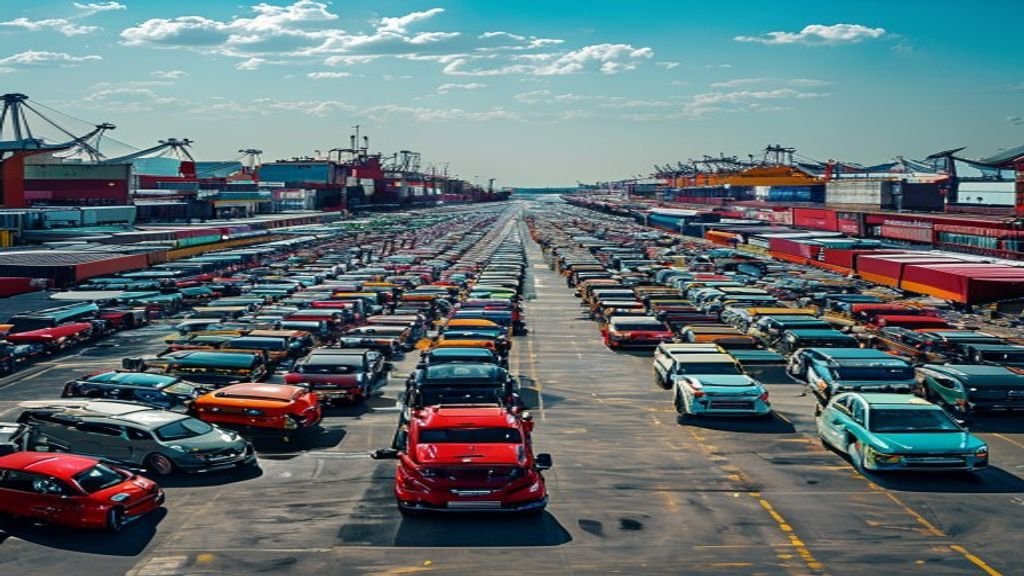
For global B2B buyers, this domestic overcapacity translates directly into unprecedented export volumes. In Q1 2026, China's auto exports surged to 650,000 units, marking a 30% year-over-year increase. Leading manufacturers are aggressively targeting overseas markets to absorb excess inventory. For instance, BYD reported 820,000 global sales in Q1, with its overseas share exceeding 20% at 170,000 units.
What This Means for Importers
- Volume Availability: Importers in emerging markets can expect sustained high availability of both new energy vehicles and traditional internal combustion engine (ICE) models as manufacturers seek to clear domestic overcapacity.
- Competitive Pricing: The financial strain caused by overproduction has forced manufacturers to slash prices and offer aggressive export incentives to lure international buyers, creating a highly favorable sourcing environment for foreign dealers.
- Market Consolidation: While larger firms continue to invest heavily in international ventures, smaller companies are finding it increasingly challenging to stay competitive. Importers should prioritize sourcing from established brands with robust after-sales support and long-term viability.
The End of the Price War? Rising Costs and Market Consolidation
For the past three years, the Chinese automotive market was defined by a brutal price war. However, the first half of 2026 has introduced a dramatic shift. Driven by the global competition for chip capacity triggered by the AI industry boom and a resurgence in lithium carbonate prices, a wave of price increases has swept across the new energy vehicle sector.
According to industry data, price hikes for major automakers ranged from RMB 2,100 to RMB 20,000 per unit in recent months. The average price of new energy passenger vehicles reached RMB 169,000 in May 2026, a year-on-year increase of RMB 7,000. This shift signifies that the market is transitioning from an incremental growth phase to a stock competition phase, where low prices are no longer the sole attraction.
Strategic Sourcing Adjustments
Global dealers must adapt to this new cost reality. The era of continuous, steep discounts is pausing. Importers should consider diversifying their portfolios. While EV demand remains strong, hybrid vehicles are showing remarkable resilience. In Q1 2026, Japan saw 340,000 hybrid sales capturing a 48% market share, and Korea recorded 165,000 hybrid sales, up 15% year-over-year. Sourcing a balanced mix of EVs and hybrids can help dealers mitigate the risks associated with fluctuating battery material costs and varying regional charging infrastructure.
Supply Chain Realities: Lithium Markets and Battery Localization
Rising EV demand is profoundly reshaping clean energy supply chains. Lithium, sitting at the core of battery technology, has become a critical pressure point. The challenge is not merely extraction, but the speed at which refining and processing infrastructure can scale. This refining bottleneck has caused price volatility that ripples through the entire EV supply chain, directly impacting vehicle pricing.
A recent analysis by Frost & Sullivan highlights that while battery costs are expected to decline further as production scales and new chemistries emerge in the long term, short-term supply chain resilience is paramount. Automakers are responding by signing long-term offtake agreements, investing directly in mining operations, and accelerating research into alternative chemistries like sodium-ion to reduce lithium dependency.
Furthermore, regional policies such as the U.S. Inflation Reduction Act (IRA) and the European Union's Critical Raw Materials Act are driving investments in domestic battery production. For global exporters, this means that battery localization is becoming a key compliance and cost factor. Vehicles manufactured with localized, compliant supply chains will enjoy a distinct advantage in markets with strict foreign entity of concern (FEOC) rules.
Actionable Insights for Global Auto Traders and Dealers
Navigating this complex landscape requires a proactive and data-driven approach. Here are key strategies for international auto traders looking to optimize their sourcing in the remainder of 2026:
- Capitalize on Current Export Volumes: With Chinese manufacturers facing domestic overcapacity, the current window for securing high-volume, competitively priced new and used vehicles is open. Lock in forward contracts where possible before further cost pass-throughs occur.
- Diversify Powertrain Offerings: Do not rely exclusively on pure EVs. The strong performance of hybrids in markets like Japan and Korea, alongside the varying charging infrastructure readiness in regions like Africa and South America, suggests that a diversified powertrain portfolio is essential for risk management.
- Monitor OEM Financial Health: The transition from a price war to a stock competition means weaker players will exit the market. Prioritize partnerships with financially stable manufacturers who can guarantee consistent spare parts availability and honor warranty commitments in your local market.
- Leverage Used Car Export Channels: As domestic competition forces rapid model迭代 (iterations) and fleet renewals in China, the supply of high-quality, low-mileage used vehicles is increasing. This presents a massive opportunity for importers in price-sensitive markets to source premium vehicles at a fraction of the new car cost.
Conclusion
The global auto trade in 2026 is defined by a delicate balance between massive production capacity and rising input costs. While China's EV overcapacity presents a golden opportunity for global importers to source high-quality vehicles at competitive rates, the resurgence of battery and chip costs signals that the era of endless price cuts is ending. By staying informed on these macroeconomic trends, diversifying powertrain portfolios, and partnering with resilient manufacturers, international dealers can secure a strong competitive advantage in the evolving global automotive market.