

Introduction: The Dual Reality of China's Auto Market in 2026
The global automotive landscape is undergoing a profound structural realignment, and at the epicenter of this shift is China. For international car buyers, traders, and dealers across Africa, the Middle East, Southeast Asia, and South America, understanding the current dynamics of the Chinese automotive market is a critical component of a successful global sourcing strategy. In the first half of 2026, China's auto industry has presented a dual reality: a significant correction in domestic retail sales coupled with an unprecedented, record-breaking surge in export volumes. This divergence creates a unique window of opportunity for international importers to access high-quality, technologically advanced vehicles at highly competitive prices.
Record-Breaking Export Volumes: A Golden Window for Global Importers
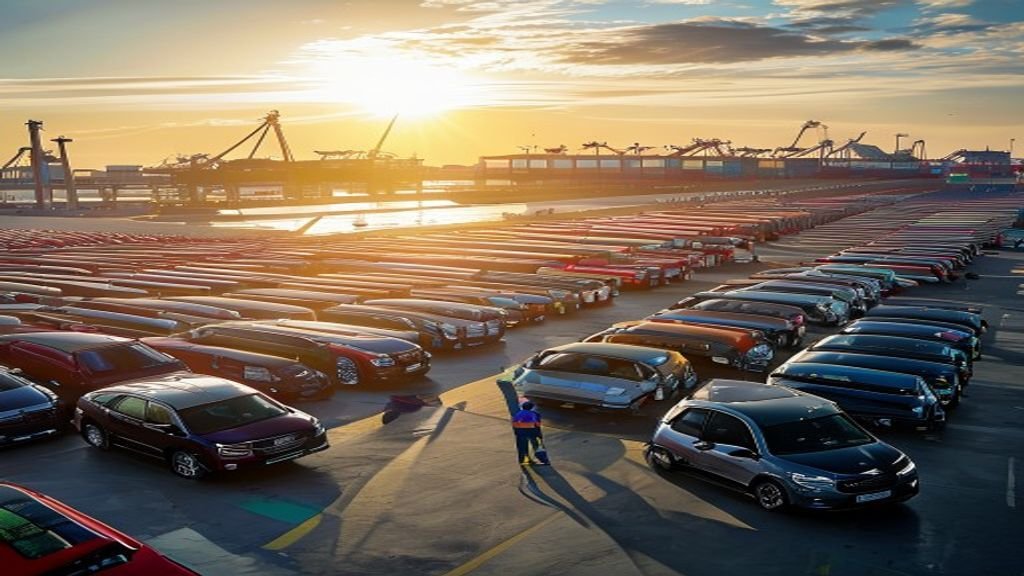
While domestic demand experienced a temporary cooling, Chinese automakers aggressively pivoted toward international markets, turning exports into the industry's brightest spotlight. According to data from the China Passenger Car Association (CPCA), H1 2026 cumulative passenger vehicle exports totaled 4.252 million units, surging over 70% year-on-year. The momentum accelerated in June, with monthly passenger vehicle exports reaching 877,000 units, an 82.3% increase from the previous year.
On a broader scale, the China Association of Automobile Manufacturers (CAAM) reported that total auto exports crossed the historic one-million monthly milestone for the first time in June, hitting 1.037 million units. For the first half of the year, cumulative auto exports reached 5.096 million units, up 65.3%. Industry consultancies, including AlixPartners, project that China's total auto exports in 2026 will approach the 10 million unit mark, cementing its position as the undisputed leader in global auto trade.
For B2B buyers, this massive export surplus translates directly into better vehicle availability, streamlined logistics, and highly favorable pricing structures. The intense domestic competition has forced manufacturers to optimize their supply chains and production efficiencies, benefits that are now being passed on to global trading partners.
The NEV Shift: From Price Wars to System-Level Innovation
New Energy Vehicles (NEVs) are the primary engine driving China's export dominance. In the first half of 2026, NEVs contributed over 46% of total auto exports, with June NEV exports alone surging past 490,000 units, representing a year-on-year increase of over 150%. The global new energy vehicles market is estimated at USD 140.35 billion in 2026 and is projected to expand at a robust CAGR of 16.1% through 2035.
Crucially, the nature of these exported vehicles is evolving. Domestic consumer behavior in China has shifted from merely "waiting for price drops" to "evaluating technology and value." This domestic demand for premium features means that the vehicles rolling off Chinese assembly lines for export are equipped with cutting-edge innovations. Features that were once considered luxury add-ons are now becoming standard:
- 800V and 900V High-Voltage Fast Charging: Dramatically reducing charging times and easing range anxiety, making pure electric vehicles highly practical for diverse global markets.
- Advanced Driver Assistance Systems (ADAS): City-level Navigation on Autopilot (NOA) and high-level smart driving features are transitioning from "usable" to "highly reliable," offering a premium driving experience.
- Smart Cockpits and AI Integration: China's automotive sector has entered a new phase of "AI-defined vehicles," where digital user experience and intelligent connectivity serve as core competitive differentiators.
As highlighted at the 2026 Stuttgart International Symposium, China is no longer merely exporting standalone mechanical vehicles; it is exporting a complete industrial ecosystem. This system-level innovation ensures that international dealers can offer their local customers vehicles that rival or exceed the technological benchmarks set by legacy global brands.
Powertrain Divergence: Strategic Inventory Planning
While the overall NEV sector is booming, a clear divergence in powertrain preferences is emerging within the Chinese market, which international buyers must factor into their sourcing strategies. In June 2026, Battery Electric Vehicle (BEV) retail sales rose by 3.6% year-on-year, demonstrating resilient consumer demand as charging infrastructure improves and battery costs stabilize.
Conversely, Plug-in Hybrid Electric Vehicles (PHEVs) and Extended-Range Electric Vehicles (EREVs) faced significant headwinds, with retail sales dropping by 27.3% and 31.9% respectively. This suggests that as markets mature and infrastructure develops, the "transitional" positioning of PHEVs and EREVs is being reassessed. For importers targeting markets with developing charging networks, PHEVs and EREVs still offer a compelling value proposition. However, for regions with established infrastructure or those looking toward future-proofing their inventory, prioritizing BEVs and the latest high-tech pure electric models is a highly strategic move.
Strategic Sourcing Insights for International Dealers and Traders
The current market dynamics offer several actionable insights for global auto traders and dealers:
1. Capitalize on the Export Surplus
With domestic retail sales plunging over 20% in H1 2026, Chinese OEMs are heavily reliant on international markets to maintain growth. This buyer's market allows importers to negotiate better terms, secure larger allocation volumes, and access a wider variety of models, including both new cars and high-quality used vehicles.
2. Leverage the Complete Industrial Ecosystem
When sourcing from China, look beyond the vehicle itself. Chinese brands like BYD, Chery, MG, and Leapmotor are backed by a massive tiered consumer demand and an efficient industrial cluster collaboration. This means better access to spare parts, software updates, and localized technical support, which are critical for building brand loyalty in emerging markets.
3. Focus on Value and Technology
The era of competing solely on the lowest price is ending. The most successful international dealers will be those who source vehicles that offer the best technological value—highlighting features like advanced safety systems, smart connectivity, and rapid charging capabilities to differentiate their offerings from traditional internal combustion engine (ICE) imports.
Conclusion: Navigating the New Global Auto Trade Realities
The first half of 2026 has unequivocally demonstrated that China's automotive momentum has transitioned from simple market scale to system-level innovation. While domestic market pressures have created a temporary slowdown in local sales, they have simultaneously fueled an aggressive and highly competitive export strategy. For international buyers, traders, and dealers, this environment presents a rare opportunity to source technologically advanced, cost-effective vehicles from the world's most dynamic automotive ecosystem. By aligning sourcing strategies with these emerging trends—particularly the shift toward high-tech BEVs and the integration of smart ecosystems—global automotive businesses can secure a decisive competitive advantage in the years to come.