

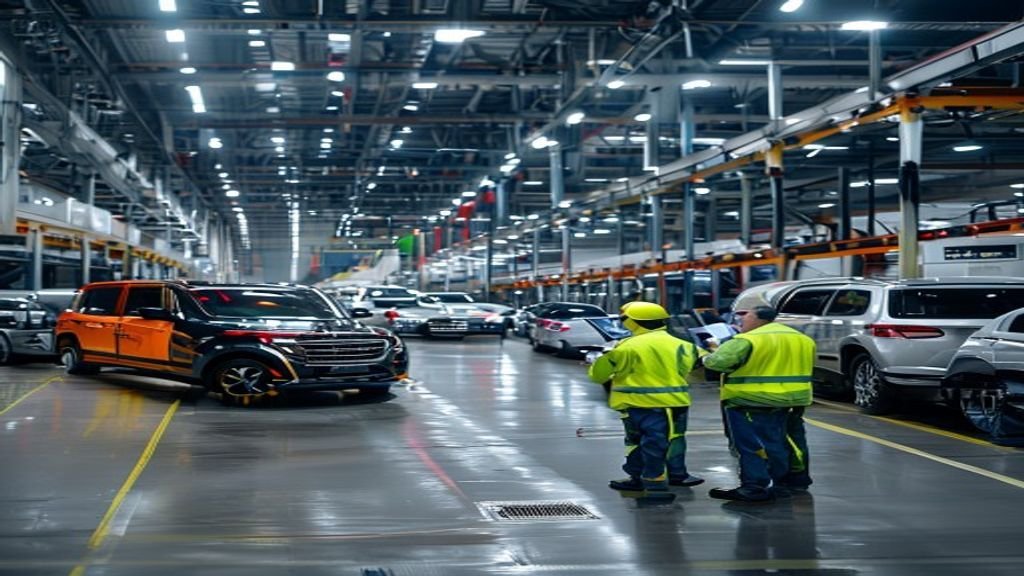
The New Era of Global Auto Trade Compliance
For international car buyers, traders, and importers, the landscape of global automotive trade is undergoing a profound transformation. In 2026, the primary barriers to entry are no longer just tariffs or basic homologation; they are complex technical standards, cybersecurity mandates, and stringent environmental certifications. From the European Union to Southeast Asia and North America, regulatory bodies are rewriting the rules of vehicle importation and deployment. For B2B automotive exporters dealing in both new and used vehicles, understanding these shifts is critical to avoiding customs delays, order cancellations, and compliance penalties.
Europe: Cybersecurity Mandates and the CO2 Reassessment
ECE R155 Cybersecurity Mandate Takes Full Effect
Starting May 1, 2026, the UN Economic Commission for Europe (UNECE) Regulation No. 155 is fully mandatory across all 38 UNECE WP.29 contracting parties, including the EU, UK, Japan, South Korea, and Australia. This regulation governs cybersecurity management systems (CSMS) and vehicle type approval (VTA) for cyber-physical automotive systems.
For export-oriented enterprises, the implications are immediate. Compliance requires both a certified CSMS at the manufacturer level and successful VTA for each model. Non-compliant vehicles will be barred from type approval, leading directly to customs clearance failures and project delays. Exporters must now verify upstream cybersecurity compliance documentation from suppliers of electronic control units and embedded software to support audit readiness.
EU Comprehensive Car Action Plan and Emission Shifts
Simultaneously, the European Commission has unveiled a new Car Action Plan, allocating over €2 billion for battery production and €1 billion for autonomous driving technologies. However, for traders monitoring the regulatory environment, the most significant shift lies in the accelerated review of CO2 emission standards.
The Commission has moved the planned review of CO2 regulations to late 2026. This proposed amendment aims to delay the imposition of fines for manufacturers struggling to meet emission targets, introducing a three-year timeline for compliance checks rather than annual assessments. Furthermore, the action plan leaves room for exploring alternative fuels in the context of the revised 2035 internal combustion engine ban, potentially altering the long-term value proposition of used ICE vehicles in the European secondary market.
Southeast Asia: Vietnam's Green Gatekeeping for Heavy-Duty Imports
In emerging markets, environmental and infrastructure compatibility are becoming strict prerequisites for market entry. Effective May 10, 2026, Vietnam introduced a regulatory shift impacting heavy-duty truck imports through Circular No. 22/2026/TT-BGTVT. This mandate requires all imported heavy-duty trucks to obtain the Vietnam Motor Import (VMI) Green Logistics Certification prior to customs clearance.
The certification evaluates three core technical dimensions:
- Energy consumption per ton-kilometer.
- NOx emission levels under real-world driving cycles.
- Interoperability with Vietnam’s national EV charging and battery-swap infrastructure standards.
For exporters, this shifts lead time responsibility upstream. However, Chinese-made pure-electric and battery-swap tractor models compliant with TCVN 12889:2025 are designated as ‘Green Channel’ products, enabling expedited processing within five working days. Importers must now factor in third-party testing costs and documentation translation to maintain just-in-time inventory models.
Global Autonomous Vehicle Regulations: Convergence and Relaxation
UN ADS GTR: A Unified Global Framework
At the 199th session of the UN World Forum for Harmonization of Vehicle Regulations, the Autonomous Driving System Global Technical Regulation (ADS GTR) was officially approved. Co-led by China, the EU, the US, and others, this is the first global technical regulation for autonomous driving.
The regulation establishes that the safety level of an autonomous driving system must at least reach that of a qualified and careful human driver. It focuses on minimum safety requirements for dynamic driving tasks and minimum risk state degradation, without dictating specific technical implementation paths. This unified framework is expected to significantly reduce compliance costs for global exporters by preventing the fragmentation of technical routes across different regions.
Market Penetration and US Regulatory Relaxation
The push for standardized AV regulations is driven by rapid market adoption. In 2026, the market penetration rate of passenger cars equipped with combined driving assistance features in China reached 70%, with Navigation on Autopilot (NOA) models exceeding 30%. Industry leaders have accumulated massive operational data; for instance, Baidu's Apollo Go has completed over 22 million orders across 27 cities, with over 330 million kilometers of autonomous driving.
Concurrently, the US is modernizing its federal safety standards. The National Highway Traffic Safety Administration (NHTSA) is considering dropping the steering wheel requirement for fully autonomous vehicles, following its June 2026 elimination of the foot brake mandate for driverless cars. This regulatory evolution aims to clear the path for purpose-built autonomous vehicles, signaling a global trend toward adapting legacy regulations for next-generation mobility.
Strategic Takeaways for Global Auto Exporters
The 2026 regulatory landscape demands a proactive approach to compliance. International traders and dealers must prioritize the following strategies:
- Secure Supply Chain Traceability: Ensure that all software and electronic components meet the cybersecurity documentation requirements for ECE R155 before vehicles reach the port.
- Pre-Shipment Green Certification: For markets like Vietnam, initiate VMI Green Logistics Certification processes months in advance to avoid customs bottlenecks.
- Monitor Regulatory Convergence: Leverage the new UN ADS GTR framework to standardize advanced driver-assistance systems (ADAS) across different export destinations, reducing redundant R&D and homologation costs.
By aligning export strategies with these evolving global standards, automotive foreign trade companies can mitigate risks, ensure smooth customs clearance, and capitalize on the growing international demand for compliant, high-quality vehicles.